
Interview with Prof. Camille Schmoll
By Lia Bassanini
5 min read · 1,055 words
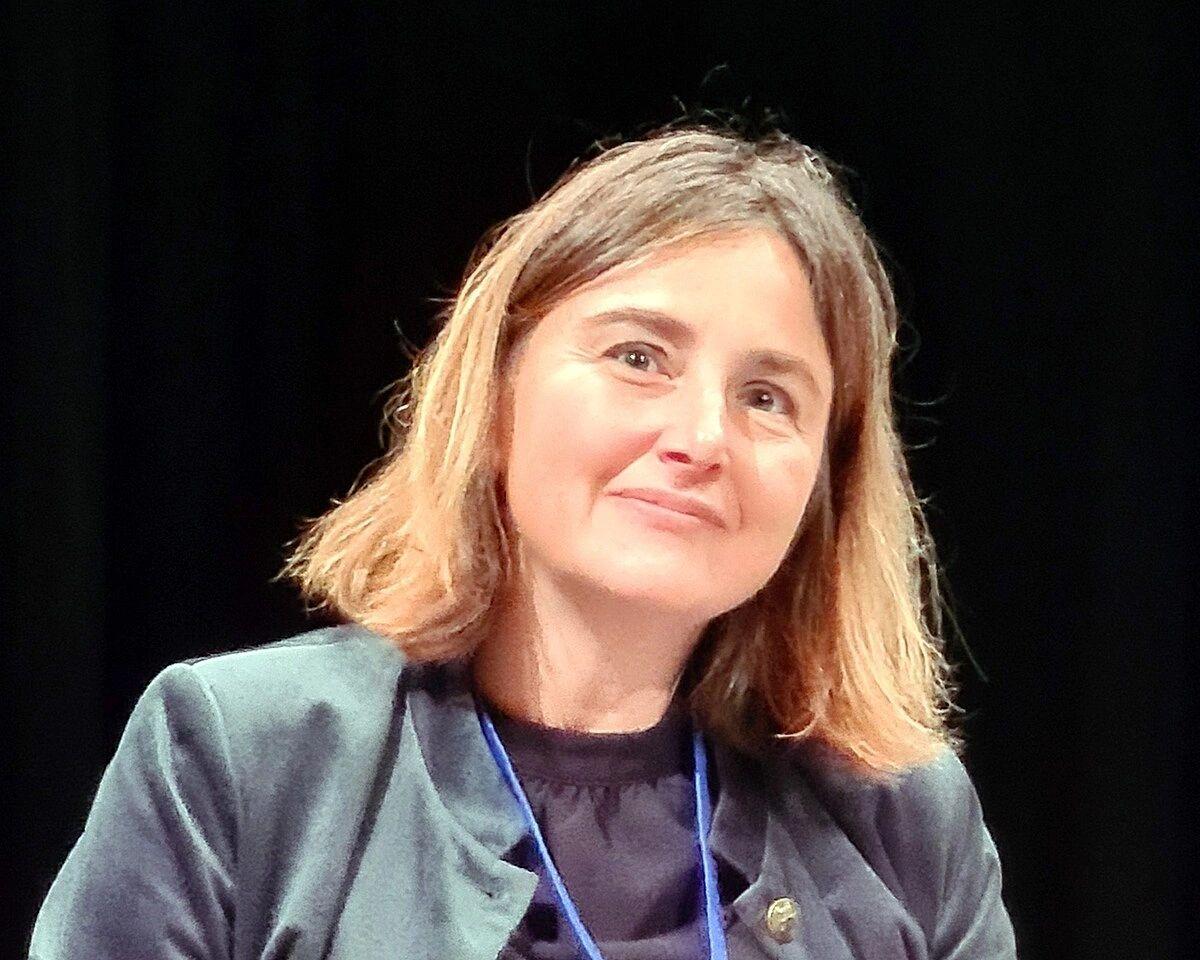
Camille Schmoll is a French geographer, working in Paris at EHESS as a Director of Research. In her research, she looks at immigration phenomena through different lenses, blending geographical and sociological concepts.
Was it natural for you, as a geographer, to focus your work on immigration?
Migration studies have actually been developed in France within the discipline of Geography. Sociology and Geography are very strong in doing migration in France, which is not the case in most other countries, aside from a few exceptions in the EU. The first research on migration in Geography was developed in the 80s and 90s in France, and now migration studies are quite strong in the discipline, so it was natural for me to go into that. I did a Master’s in migration, which was led by geographers.
Amongst your research, you focused on the term of border, in the book you co authored, Méditerranée. Des frontières à la dérive. Can you explain to us how migration policies have impacted the evolution of the social and spatial meaning given to “border”?
The terms of border and of bordering (border as a process) have become increasingly important within the field of migration studies. Many migration scholars now talk about doing border studies, because with the Europeanization of migration policy, borders have become increasingly important. It is a paradox because, when we think about migration policy and Europeanization, we think about free movement and circulation. However, the point is that, with the increasing importance of free movement and circulation in Europe, there has been, at the same time, a process of strengthening of the external border of the EU. Migration scholars are acknowledging and documenting the increasing importance of the external borders. We see that both the spatialities and the temporalities of borders have changed. Borders have become moving, mobile. You cannot simply describe borders as a line anymore. They are moving and diluting. You can find them somewhere, but then they move and you find them elsewhere. They change very quickly. Sometimes, we also talk about “sticky” borders, when people are embedded within the border and when along their trajectories, it becomes increasingly difficult to cross the border. The very body of the person that attempts to cross the border is impacted by border policies.
At the same time, the temporalities of borders have changed. People cross the border over months or even years because of this new spatiality: they do not have to cross only the line, but also the space of the border.
My attempt has been to explain how we can now talk about a “life within the border”. People will not spend only one week or one month within the border, but live inside the border. It becomes somewhat of a condition, a “border condition”. People are caught in the border. When you think about people that are just stranded along their trajectories in Libya, for instance, you understand it is not a matter of crossing anymore, but a matter of living.
You also worked on gendered experiences of the immigration process. Are there differences between men’s and women’s experiences? To what are these differences due?
I worked on the gendered experiences because the image we have in the media, but also in the political discourse on migration, is a masculine image of migration. My attempt was to really feminize migration, to document the importance of women within international migration. Women are actually more important than men in Europe, as they represent 52% percent of international migration.
The first point was really to document what it means to cross borders, to live the migration experience as a woman. What I found, like many other scholars, is that migration is a highly gendered phenomenon. We see it, for instance, in the motivations of migration. The reason why women choose to migrate is always connected to gender factors, and specifically gender violence, along political and economic factors. Some women may want to leave their country because they were forced to marry, others because they fear for their children, their daughters. Then, along the trajectory, the violence and the obstacles they face are gendered. Indeed, women are much more subject to sexual violence along their journey than men. During my research, I met about 100 women that have crossed the Mediterranean Sea and all of them had been sexually assaulted. The difficulty we see when these women arrive in Europe is that we lack infrastructures that will take into consideration the trauma of gendered violence to help them recover from it.
You wrote a book, Les Damnées de la mer, in which you tell the story of women you followed from their arrival in refugee camps in Italy, to their integration in France and other countries. What is the main lesson you received from researching and writing this book?
My first attempt was to try to show how by looking at women’s trajectories, you get a completely different image of what migration is and it can be also interesting to understand men’s experience. In the book, I talk about the “autonomy of migration”, a common concept in migration studies, which is the idea that people who attempt to go to Europe are very much full of resources, not necessarily economic resources, but also projects. Those projects do not disappear along the way. I wanted to raise awareness on the importance of the strength of these people. I wanted to show how they are able to mobilize contacts, economic means, and skills along their trajectory. In the last 15 years, there has been very strong debates around migration. On one side, an important part of policymakers is arguing that migration is somehow threatening. On the other side, you have the humanitarian discourse that often portrays migrants as victims. I wanted to show that there are not only victims, there are also people capable of having a project, of seeing Europe as a new horizon for their life, of having agency.
The idea was also to fight against many stereotypes around migration: migrant people are poor, they do not have any agency, they come because they have been caught in criminal networks, etc. I wanted to show that these women really have strategies to navigate obstacles. I really wanted to insist on this issue of agency and autonomy of migration.