
Living Conditions in Reception Facilities: Between EU Law and Reality
By Agnese Coletta
10 min read · 1,984 words
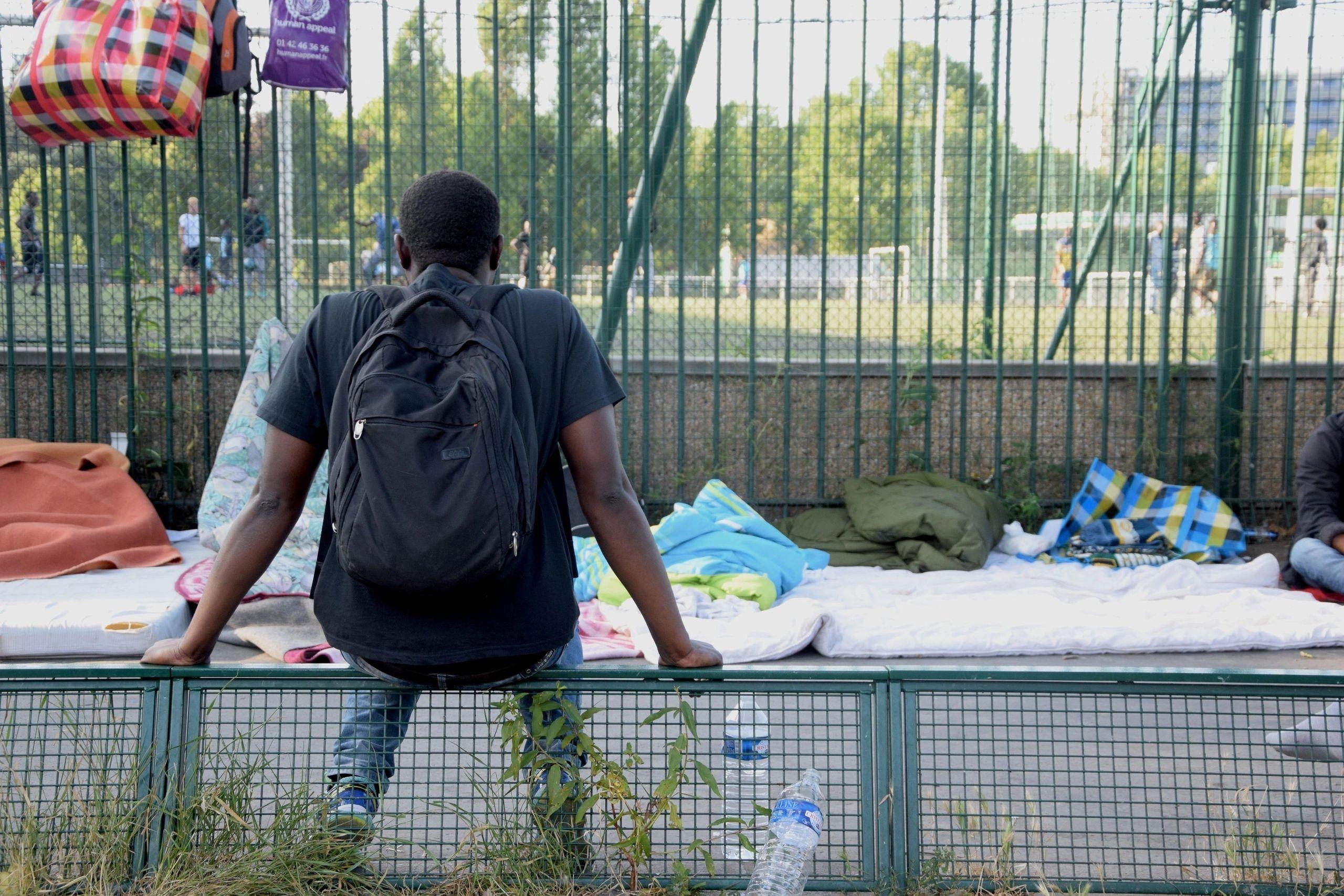
The European Union’s legal system promises dignity to all individuals. Yet, in EU migration governance, the gap between law and practice remains a pressing issue. Frameworks such as the Common European Asylum System (CEAS) and the New Pact on Migration and Asylum have promised to asylum seekers adequate living conditions and respect of human rights while awaiting protection decisions. Indeed, under the recast Reception Conditions Directive (Directive (EU) 2024/1346), entered into force in 2024, Member States are required to ensure housing, food, hygiene products, healthcare, and basic material support to all applicants, setting a harmonized minimum standard across the Union (European Union, 2024; European Commission, 2025). In practice, however, reception centres across the EU often fall short of these standards. Investigations conducted by NGOs, EU agencies, and courts, document overcrowding, poor sanitation, limited healthcare, and nutritional shortfalls, among numerous other issues (EUAA, 2025; Bove C. et al., 2025). The gap between the framework created by EU law and the actual realities highlights systemic shortfalls, lack of enforcement, legal vacuums, and correlated issues, leading to a broken asylum system where reception facilities’ living conditions are insufficient.
As of 2025, the EU has improved its legal framework regarding reception facilities and living conditions of asylum seekers; nonetheless, the EU law reality is still filled with legal vacuums and uncertainties, leaving cracks open to legal loopholes and escapes for Member States unwilling, or unable, to comply. In 2024, the recast Reception Conditions Directive (RCD) entered into force, setting a minimum harmonization standard for Member States’ obligations. The Directive is part of the New Pact on Migration and Asylum, which aims to establish a common, rights-based EU asylum system, which includes stricter reception safeguards. Through the RCD, which replaces the 2013 Directive and raises minimum standards for asylum reception, the Union emphasized the access to adequate living conditions to all applicants, including ‘...housing, food, clothing, and personal hygiene products…’ and necessary healthcare services (Radjenovic, 2024; European Union, 2024). However, the recast directive is not yet currently applicable, as the deadline for national transposition is set in June 2026. Thus, improvements driven by it are yet to be recorded at the national level. The Directive also mandates capacity planning, stating that Member States must maintain ‘sufficient reception capacity’ and contingency plans for influxes, as well as banning any automatic denial of care to applicants, even to those subjected to restrictions (European Commission, 2025). Furthermore, although the Directive allows some administrative measures, such as restricting movement or assigning applicants to specific locations with safeguards, it does not allow detention solely on the account of being an applicant seeking asylum (recital 26 of the Preamble) (European Union, 2024).
Despite the standard set, the Directive leaves ample room for national flexibility. This, however, oftentimes results in countries adopting simply the minimum required threshold, or even falling below it, creating significant discrepancies between states for matters such as the possibility to apply for municipal residence, types of facilities, decrees of financial support, and actors responsible for providing reception (EUAA, 2025; Radjenovic, 2024). This substandard reality is considerably due to the severe pressure certain Member States are under: as the European Union Agency for Asylum (EUAA) reports, overcrowding and capacity shortfalls are persistent issues in countries such as Ireland, Italy, the Benelux, and Greece (EUAA, 2025). The results of overcrowding in facilities include safety hazards, lack of privacy, and insufficient or simply unavailable services; indeed, this incessant overcrowding often forces individuals to sleep in corridors, tents, or even outdoors. Often, as can be seen, Member States breach the fundamental rights of applicants. These individuals are left in conditions where, despite technically having rights and having access to resources and services, they receive no actual support, and can do very little to make their voices be heard and have their rights be respected.
NGOs, associations, and volunteer groups often step in, making an effort to ease the lack of action and infrastructure of governmental institutions, with political exposures frequently hindering these efforts, rather than supporting them. These organizations, too, often report precarious conditions in reception centres and cases of violations of fundamental rights.
Hotspots, such as the Italian cities of Trieste (north-east), Taranto, or the island of Lampedusa (south), are overflowing with migrants seeking asylum, and reception facilities, stranded, simply cannot handle the influx, leaving individuals at serious risk, with no infrastructures, services, help, or hope (ASGI, 2025).
A recent case, covered by Italian news, shed light on the contingent case of the port area of Trieste, a city on the Italian northeastern border with Slovenia and a key entry point for many migrants coming from the Balkan route. Daily, asylum seekers wait for reception and find shelter near the train station and in abandoned warehouses, when not evicted by institutions, battling the cold and hunger. This compelling scenario has led to precarious health conditions, hunger, and unfortunate deaths, which could have been avoided if reception centres were adequately prepared for the influx, and institutions had acted promptly, respecting fundamental rights and duties (Candito, 2025; IRC, 2025).
Italy’s asylum system is growing more strained and restrictive, solidifying frameworks which limit prospects for most applicants. In 2024 alone, the number of first-time asylum requests registered summed up to 151,120, almost double of 2022’s registered numbers (ASGI, 2025). The government also introduced Law 187/2024 (converted and amended form of Legislative Decree N.145), introducing a priority criterion for access to ordinary reception facilities (“CAS” and government centres) which gives precedence to those rescued at sea, while other applicants such as land arrivals and Dublin returnees are accommodated only if there is capacity, which realistically often results in them being left with no place or services. Moreover, relating to the case of Trieste, in 2025, the Italian government reintroduced border controls with Slovenia (Article 28, Schengen Borders Code), justified by security concerns (European Union, 2016; ASGI, 2025). The formalization of the Memorandum of Understanding (MoU) between Italy, Slovenia, and Croatia, further established trilateral border patrols throughout the Balkan route, raising concerns about pushback operations and fundamental rights violations not in line with the EU legal framework (Government of the Republic of Slovenia, 2025; ASGI, 2025). Overall, Italian reception centres, although meeting on paper EU-mandated minimum thresholds such as shelter, food, and healthcare, are currently in a state that is far-below the ‘adequate’ standard of quality promised.
Greece is another example of a system where EU law and reality clash. Being a border state, much like Italy, the Greek peninsula and its Aegean islands are strained with arrivals, with reception centres failing to meet EU standards. The New Pact’s migration regulations created the Closed Controlled Access Centers (CCACs), reception camps in the islands of Lesvos, Samos, Leros, and Kos, with the first facility opened in late 2021 (Agrafioti A.C. et al., 2025). These CCACs, along with the Transit Accommodation Centres (TACs) on the Greek mainland, have been widely criticized for their ‘prison-like’ environment (IRC, 2022). In 2024, Reception and Identification Service (RIS) registered a total of 65,072 individuals, with over 51,000 residing in CCACs on the islands; the 2024 data showed a rapid increase in applicants compared for instance to 2023, where only around 33,000 applicants were registered, almost half of which resided on the islands (Agrafioti et al., 2025; Oikonomou et al., 2023). On CCACs, movement is severely restricted as the centres are surrounded by high concrete walls and razor wire, and are often remote from towns. Inside, staff shortages have left clinics undermanned and schools essentially absent, with asylum seekers facing reported violent behaviour by security and with widespread shortcomings in essential fields such as legal assistance, medical care, financial assistance, and interpretation (RSA, 2023). The underclosure and underfunding have direct harm on the asylum seekers in these centres, with vulnerable groups such as single parent families with minor children, unaccompanied minors, victims of torture, and persons with serious illnesses being heavily affected (Agrafioti et al., 2025).
In 2024, several judgments were issued by the European Court of Human Rights (ECtHR) concerning the inadequate conditions for applicants in Greek facilities throughout 2016 and 2019 (EUAA, 2025). In the case A.R. and Others v Greece (Case no. 59841/19), as well as in N.N. and others v Greece (Case no. 59319/19), the Court found a breach of Article 3 of the ECHR (prohibition of torture, inhuman, or degrading treatment or punishment) arising from overcrowding and lack of sanitation (EUAA, 2024). Such instances, among numerous others, show the gap between the standards set by the Directive which demand respect for human dignity in housing and care, and the reality of reception facilities in the country.
The living conditions in Europe’s asylum reception facilities today fall significantly short of the EU law standards. While the RCD clearly establishes the need for ‘adequate’ housing, nutrition, healthcare, and dignity for applicants, in reality, many centres across the Member States suffer overcrowding, medical care issues, lack of support, etc. As of 2025, hopes for systemic and factual change rely mainly on the full implementation of the RCD. However, the 2026 deadline for national transposition must be viewed from a realistic perspective, given that numerous Member States have a history of late or incorrect compliance with directives. This would risk further delaying the application of the new standards and requirements, perpetuating the current gaps. The contrast between EU commitments and countries’ practices underscores the need for urgent and concerted action, both at the national and EU level. Furthermore, Member States must not only comply with EU laws, but must also take substantive action such as investing in infrastructure and managing the influxes to avoid overcrowding. Meanwhile, EU institutions must maintain oversight, intervene in critical situations, make sure that no Member State is over-burdened, and ensure that resources are allocated fairly. Ensuring EU-level harmonization and the respect of fundamental rights is crucial to align practice with principle. Ultimately, improvement is certainly needed to ensure all asylum seekers are treated in line with European values and with respect for human rights, as promised by the EU’s framework.
Bibliography
(2022). One year since Greece opened new “prison-like” refugee camps, NGOs call for a more humane approach. International Rescue Committee (IRC).
(2023). What is happening today in the refugee structures on the Aegean islands: Serious problems in the EU-funded structures. Refugee Support Aegean (RSA).
(2024). CASE OF A.R. AND OTHERS v. GREECE. Case no. 59841/19. European Court of Human Rights (ECtHR). EUAA.
(2024). CASE OF N.N. AND OTHERS v. GREECE. Case no. 59319/19. European Court of Human Rights (ECtHR). EUAA.
(2024). LEGGE 9 dicembre 2024, n. 187. Gazzetta Ufficiale della Repubblica Italiana.
(2025). Invisible People: Data Reveals Stricter Migration Policies Are Driving More Perilous Journeys on the Balkan Route. International Rescue Committee (IRC).
Agrafioti A.C. et al. (2025). Country Report on Greece - Update on 2024. Asylum Information Database (AIDA).
ASGI (2025). Conditions in reception facilities: Italy. Asylum Information Database (AIDA).
Bove C., Astuti M., Pigato C. & Papotti G. (2025). AIDA Country Report on Italy - Update on 2024. Asylum Information Database (AIDA).
Candito, A. (2025). Il muro di gomma di Trieste: 200 richiedenti asilo costretti dalla burocrazia al gelo del Porto. Repubblica.
EUAA (2025). Asylum Report 2025. European Union Agency for Asylum.
European Commission (2025). Reception Conditions.
European Union (2016). Regulation (EU) 2016/399 of the European Parliament and of the Council of 9 March 2016 on a Union Code on the rules governing the movement of persons across borders (Schengen Borders Code). Official Journal of the European Union (EUR-Lex).
European Union (2024). Directive (EU) 2024/1346. Official Journal of the European Union (EUR-Lex).
Government of the Republic of Slovenia (2025). Trilateral police patrols to be established at the Croatian external border. GOV.SI.
Oikonomou, S. et al. (2023). Country Report on Greece - Update on 2023. Asylum Information Database (AIDA).
Radjenovic, A. (2024). Reception of asylum-seekers – Recast directive. European Parliament