
Migration ‘Crisis’ : Rethinking Europe’s 2015 Migration Narrative
6 min read · 1,168 words
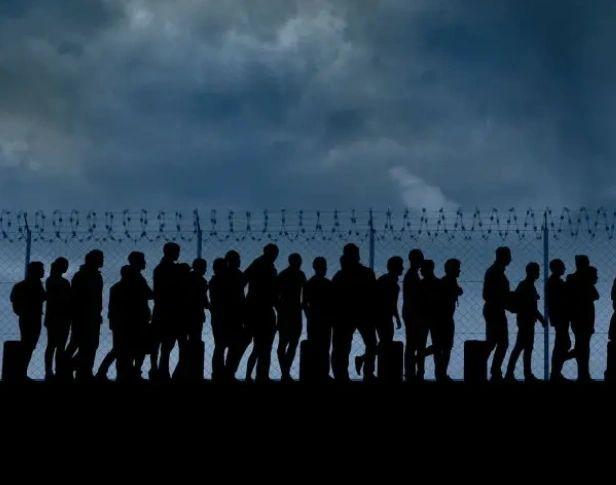
Since 2015, Europe has witnessed the arrival of one million asylum seekers and migrants. The images of overcrowded boats crossing the Mediterranean Sea fed a long debate in Europe. Politicians, journalists, and commentators quickly rallied around a single term to describe the situation: the Migration ‘Crisis’.
Is this label truly appropriate though? Does the term ‘crisis’ reflect the reality, or is it a political narrative designed to justify certain policy preferences? In the years that followed the 2015 events, the term paved the way for public discourse that emphasized Europe’s unpreparedness and the EU’s incapacity to solve the issue. However, many academic researchers argue that the use of the ‘crisis’ is far from being uncontested or neutral.
By definition, a ‘crisis’ suggests the presence of a threat that can disrupt the stability of an existing system. Therefore, according to some scholars, there are valid reasons to use the term ‘crisis’ for the 2015 events. Triandafyllidou (2018) explains that this label was not only a product of the media but also reflected the real challenges faced by European states. She argues that the massive arrival of refugees and migrants led to humanitarian emergencies at borders, creating a sense of urgency in both public administration and society. She points out that this term became accepted because the situation was experienced as a rupture from normality.
Nevertheless, academic voices such as Mudde (2016) and Humpelstetter (2021) have challenged the supposition that the 2015 migration situation constituted a crisis in the objective sense. By definition, a ‘crisis’ suggests the presence of a threat that can disrupt the stability of an existing system. However, they pointed out that Europe, a region of 500 million people, was not objectively facing any threat from the arrival of a million asylum seekers and migrants. On the contrary, they argue that the situation exposed the limitations of the actual European migration systems.
As of December 2015, more than one million asylum seekers and migrants arrived in Europe, marking the largest influx since the end of World War II (Gladysh & Sychov, 2020). According to the UNHCR, the precise number was 1,005,504, with the majority fleeing conflict and political instability in Syria, Afghanistan, and Iraq (UBC, 2015). Although the numbers were unprecedented for the European Union, it only represented about 0.2% of the EU’s total population of over 500 million. In 2016, arrivals dropped to 362,000, further highlighting the exceptional nature of 2015 (Gladysh & Sychov, 2020).
Despite the scale, many academics argue that labeling this situation a ‘crisis’ can be misleading when placed in a demographic context. As Humpelstetter (2021) notes, this term is highly contested among scholars, who point out that Europe’s demographic and economic capacity far exceeded the challenge posed by the new arrivals. Similarly, Mudde (2016) argues that the so-called ‘crisis’ was less about numbers but more about the political and institutional response, revealing the EU’s lack of solidarity between member states and its unpreparedness rather than a real existential threat for its European citizens.
Other scholarly analysis suggests that the ‘crisis’ narrative served political purposes, fueling securitization and replacement theories, rather than reflecting an objective emergency and finding effective solutions (Humpelstetter, 2021; Gladysh & Sychov, 2020). The framing of migration as a ‘crisis’ enabled restrictive policy measures and justified exceptional responses, often contrary to Europe’s principles of solidarity and humanitarian responsibility (Semerádová, 2023).
In addition, the ‘Migration Crisis’ label hides the contributions migrants have made to European societies. Framing migration primarily as a ‘crisis’ promotes a negative connotation in the public discourse, portraying migrants as a source of disruption and thereby neglecting their positive contributions. This perspective reinforces fear and exclusion rather than integration or opportunity. Numerous studies highlight that migrants arriving in 2015 contributed to innovation and helped address demographic challenges, such as ageing populations, by filling vital labour shortages (Dustmann et al., 2017; OECD, 2019). Moreover, this framing presents migration as a sudden and exceptional issue, simplifying its nature and therefore reducing it to a temporary event rather than a complex phenomenon shaped by global inequalities and economic ties (Castles, 2016).
Moreover, the focus on the ‘crisis’ has overshadowed the EU’s limits, including the Dublin Regulation’s inefficiencies and the lack of a common asylum system, which intensified the challenges faced in 2015 (Guild et al., 2017). The crisis narrative has often been used to justify securitization policies that prioritize border control over human rights, leading to increased detention and a limited access to asylum procedures (Carrera & Hernández i Sagrera, 2019). This approach increases humanitarian concerns and is contrary to the EU’s commitment to international protection standards. It also distracts from addressing root causes of migration, such as climate change, poverty, and conflicts which require international efforts rather than reactive border management.
In conclusion, it is important to reconsider the question of whether Europe truly experienced a migration ‘crisis’ or whether the ‘crisis’ lies in the global systems that produce displacement. Climate change, wars, and geopolitical instability in regions such as the Middle East or Sub-Saharan Africa are primary drivers of migration flows (Bettini et al., 2017; Felli & Castree, 2012). The EU’s environmental footprint and economic interests contribute to these factors, meaning that migration is often a symptom of broader crises rather than an isolated issue. Recognizing this can help shift the narrative from a defensive approach to a responsible and united one. Achieving this requires rethinking migration not as a threat but as a challenge intertwined with sustainable development, global justice and peacebuilding.
References List
Bettini, G., Nash, S. L., & Gioli, G. (2017). Climate migration and the security-migration nexus: A critical perspective. Geoforum, 88, 1-4.
Carrera, S., & Hernández i Sagrera, R. (2019). The EU’s migration and asylum policy: A securitised approach. European Policy Centre.
Castles, S. (2016). Migration and the European crisis. Global Perspectives, 1(1).
Dustmann, C., Frattini, T., & Halls, C. (2017). Assessing the Fiscal Costs and Benefits of A8 Migration to the UK. Fiscal Studies, 38(3), 421-448.
Felli, R., & Castree, N. (2012). Neoliberalising adaptation to environmental change: foresight or foreclosure? Environment and Planning A, 44(1), 1-4.
Gladysh, M., & Sychov, V. (2020). The Influence of the Migration Crisis of 2015 on the EU Migration Policy. Studia Europejskie – Studies in European Affairs, 3/2020.
Guild, E., Costello, C., Garlick, M., & Moreno-Lax, V. (2017). The 2015 Refugee Crisis in the European Union. European Parliament Briefing.
Humpelstetter, M. (2021). Analysing the EU’s Migration-Development Nexus Through the Lens of Competing Policy Frames. Duodecim Astra, 1, 26–54.
Mudde, C. (2016). Europe’s Populist Surge: A Long Time in the Making. Foreign Affairs.
OECD (2019). International Migration Outlook 2019. OECD Publishing, Paris.
Open Case Studies at UBC. (2015). The 2015 European Refugee Crisis. https://cases.open.ubc.ca/the-2015-european-refugee-crisis/
Semerádová, K. (2023). Migration Crisis and the EU Borders after 2015. Romanian Journal of European Affairs, 23(2).
Triandafyllidou, A. (2017). A “Refugee Crisis” Unfolding: “Real” Events and Their Interpretation in Media and Political Debates. Journal of Immigrant & Refugee Studies, 16(1–2), 198–216. https://doi.org/10.1080/15562948.2017.1309089