
The EU’s response to the instrumentalisation of migration
By Lia Bassanini
14 min read · 2,797 words
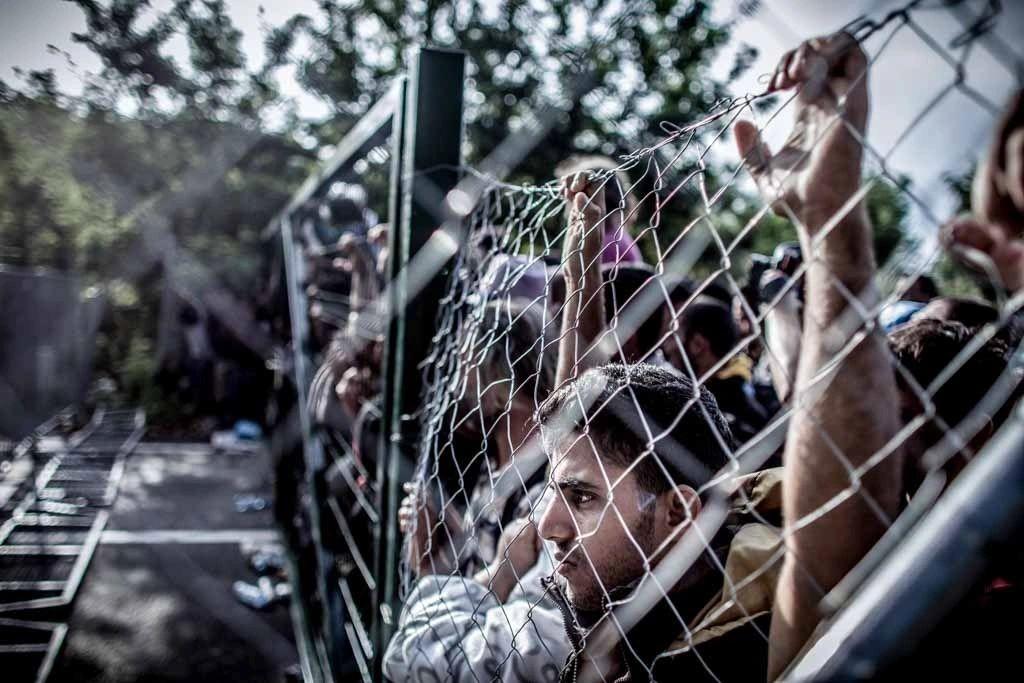
Instrumentalisation and weaponisation of migration have moved to the centre of EU debates on borders, security and international responsibility. Instrumentalisation of migration refers to situations where third States deliberately direct or facilitate the movement of migrants and refugees towards EU borders to exert political or economic pressure on the Union and its Member States (FRA, 2022; Jepifanova, 2023). Weaponisation, on the other hand, designates the use or threat of cross-border population movements as a foreign-policy tool to extract concessions or destabilise target States, in line with Greenhill’s (2010, 2025) concept of “weapons of mass migration”.
Two recent episodes illustrate this dynamic particularly clearly. Belarus’ “hybrid tactics” at the Poland/Latvia/Lithuania borders since 2021 saw Belarus facilitate visas and transport for migrants and push them towards the EU frontier, which EU leaders labelled a “hybrid attack” (Forti, 2023; Jepifanova, 2023). In a different regional context, Turkey repeatedly threatened to “flood Europe” if the EU did not meet Turkey’s demands, leading to the 2016 EU-Turkey Statement (Greenhill, 2010; Carrera & den Hertog, 2016; Groenendijk, 2021). Both cases reveal how States at the EU’s periphery can instrumentalise migration to reshape their relationship with the Union.
Considering this, this paper asks: How has the EU legally responded to the instrumentalisation and weaponisation of migration (e.g., Belarus hybrid tactics at Poland/Latvia/Lithuania borders, or Turkey pressures), and does this response maintain legal limits while achieving strategic goals? It argues that the EU has constructed a framework of legally constrained strategic containment combining derogations, hardened border procedures and, where possible, externalised cooperation to deter instrumentalisation and weaponisation of migrants (European Commission, 2021; European Commission, 2024a; European Commission, 2024b).
Legal framework: constraints and governance context
Any assessment of the EU’s response must begin with the core international legal constraints that bind its Member States. The principle of non-refoulement in Article 33 of the 1951 Refugee Convention and Article 3 of the Convention Against Torture prohibits returning anyone to a place where they face a real risk of persecution, torture, or inhuman or degrading treatment (Chetail, 2021). Human rights treaties and regional instruments extend non-refoulement beyond refugees and prohibit collective expulsion, requiring individual assessment of each case (for example, Article 4 of Protocol 4 ECHR and Article 13 ICCPR). These norms are complemented by procedural guarantees: the right to an effective remedy with suspensive effect, fair procedures in asylum and return, and safeguards in any deprivation of liberty (Chetail, 2019; Chetail, 2021). Taken together, they impose substantive and procedural limits on how States may manage their borders.
Chetail’s (2021) account of an integrated approach to refugees and human rights law is particularly helpful in this regard. Refugee law and human rights law are now so interdependent that they form a single continuum of protection, in which human rights law has “updated and enlarged” the Refugee Convention. This means States cannot treat refugee law as lex specialis to circumvent broader human-rights obligations. Rather, they must interpret and apply refugee law in harmony with human-rights standards (Chetail, 2021). Chetail (2023) insists that international law is not a “menu à la carte”: States cannot selectively invoke security or migration-management concerns to escape non-refoulement and due-process duties. This perspective is crucial when evaluating claims that instrumentalisation and weaponisation justify exceptional responses.
At the EU level, these international duties are complemented by EU primary and secondary law. The Charter of Fundamental Rights of the EU guarantees the right to asylum (Article 18) and protects against refoulement and collective expulsion (Article 19) (Peers and Prechal, 2014). The Common European Asylum System (CEAS), including the Qualification Directive, Asylum Procedures Directive, Dublin Regulation, Returns Directive and the Schengen Borders Code, shapes Member States’ obligations in procedural and substantive terms (European Commission, 2024b). EU law must be interpreted consistently with EU international obligations, and the European Court of Justice has repeatedly anchored EU migration and asylum law in general principles and fundamental rights (Chetail, 2019; Chetail, 2021).
Recent reforms must be situated within this existing framework. The 2024 political agreement on the Pact on Migration and Asylum introduces systematic border procedures, new crisis and force-majeure provisions, and an explicit “instrumentalisation” scenario, allowing special measures, while maintaining a formal commitment to the Charter (European Commission, 2024b; COFACE, 2024). The proposed Regulation addressing instrumentalisation (COM(2021) 890) defines “instrumentalisation of migrants” and allows affected Member States to derogate from certain procedural and reception standards, such as longer registration deadlines, expanded use of border procedures, again under the umbrella of EU and international law (European Commission, 2021; ECRE, 2022). These developments suggest a move towards codifying crisis and instrumentalisation responses with EU law, while keeping formal references to fundamental rights.
Finally, the EU’s response sits within a broader architecture of global migration governance. Chetail (2023) characterises the Global Compact for Migration as a soft-law instrument that can coordinate state behaviour and provide a counter-narrative to populism, but also warns that soft law remains highly political and may become a smokescreen for rights violations if not implemented together with hard-law obligations. Chimni’s (2018) reading of the Global Compact for Refugees highlights how its emphasis on easing pressure on host States and flexible responsibility-sharing mechanisms might legitimise the existing non-entrée regime rather than dismantling it. This literature provides an important lens for understanding how the EU’s new “instrumentalisation” toolkit may contribute to, or resist, these broader trends.
EU response to instrumentalisation and weaponisation
From 2021, Belarus facilitated visas, flights and ground transport for migrants, mainly from the Middle East, to its borders with Poland, Lithuania and Latvia. Belarusian authorities reportedly escorted people towards the EU fences and blocked them from returning inland (Forti, 2023; Jepifanova, 2023). EU institutions and affected Member States labelled this practice a “hybrid attack” on the Union, framing it as part of a broader pattern of hostile actions by Belarus and its Russian ally (Statewatch, 2021; Jepifanova, 2023). This framing explicitly recast asylum-seekers and migrants as tools in an interstate confrontation rather than rights-holders first and foremost.
In response, Lithuania, Latvia and Poland adopted emergency legislation enabling rapid returns and pushbacks, limiting access to asylum procedures at border zones, and restricting the presence of journalists and NGOs in those areas (Forti, 2023; Beuscher et al., 2025). Legal analyses argue that these laws derogate from EU asylum standards and violate obligations linked to non-refoulement and the prohibition of collective expulsion, especially where individuals are denied any meaningful opportunity to submit an asylum claim (Forti, 2023; Jepifanova, 2023). The emergency framework thus normalised practices that would likely be unlawful in ordinary circumstances.
At EU level, the Commission initially relied on Article 78(3) Treaty on the Functioning of the European Union to propose temporary measures in favour of Latvia, Lithuania and Poland, accepting extended registration deadlines and loosened reception obligations (European Commission, 2021). It then tabled the proposed Instrumentalisation Regulation. Civil-society actors criticise the proposal for entrenching a derogation regime that risks making exceptions the norm, especially if instrumentalisation is interpreted broadly and not tightly circumscribed (ECRE, 2022; FRA, 2022).
This case therefore showed the EU responding to an instance of weaponised migration by accommodating Member States’ emergency practices through a dedicated derogation framework, while formally reaffirming adherence to the Charter and international law (European Commission, 2021; Chetail, 2021). It highlighted the main tension this essay targets: whether legal limits are preserved or effectively hollowed out by the move from ad hoc emergency measures to permanent derogation mechanisms.
Turkey has in recent years strategically used migration in its relations with the EU. President Erdogan repeatedly threatened to “open the gates” and allow refugees to move towards Europe if the EU failed to deliver promised funding or support for Ankara’s Syria policy (Greenhill 2010; Uras, 2025). Greenhill (2010, 2025) treats this as an archetypal case of coercive engineered migration, where Turkey exploits its position as a major refugee-hosting state to influence EU decisions.
The Statement provides that “all new irregular migrants” crossing from Turkey into the Greek islands will be returned to Turkey, with each case assessed individually in line with EU and international law, and that for every Syrian returned, another Syrian will be resettled from Turkey to the EU (European Council, 2016; Groenendijk, 2021). In exchange, the EU committed substantial financial support and political incentives, including facility funding and visa-liberalisation prospects (Carrera & den Hertog, 2016; Uras, 2025).
The assumption that Turkey qualifies as a “safe third country” or “first country of asylum” is contested, given concerns about the effective protection standards and the risk of chain refoulement (Hailbronner, 2016; Papadopoulou, 2018). Empirical work suggests that the Statement sharply reduced irregular arrivals in the Eastern Mediterranean and may have led to fewer deaths in that corridor, although displacement to other routes complicates the picture (Hass et al., 2025; Uras, 2025). At the same time, the EU has become deeply dependent on Turkey’s cooperation, leaving it exposed whenever Ankara chooses to weaponise its role as gatekeeper (Greenhill, 2010; Greenhill, 2025).
Does the EU stay within legal limits and achieve strategic goals?
In the Belarus case, many of the emergency practices at the Belarus border sit uneasily with, or breach, core legal norms. Systematic pushbacks and denial of access to asylum procedures likely violate the prohibition of collective expulsion and the obligation to provide an effective opportunity to seek protection (Forti, 2023; Jepifanove, 2023). Even if the proposed Instrumentalisation Regulation references the Charter and international law, it risks legitimising broad derogations that are incompatible with the integrated approach, which does not accept security framings as a basis for curtailing non-refoulement (Chetail, 2021; Chetail, 2023; ECRE, 2022).
For Turkey, legality is contested both on the designation of Turkey as “safe” and on implementation. The safe-third-country concept has been stretched to accommodate the EU-Turkey Statement, despite evidence of gaps in protection and refoulement risks (Hailbronner, 2016; Papadopoulou, 2018; Chetail, 2021). Hotspot procedures and detention-like conditions on the Greek islands have raised serious concerns about due process, access to effective remedies and humane treatment (Uras, 2025; Groenendijk, 2021). In Chetail’s terms, the integrated protection regime requires that returns to Turkey genuinely safeguard refugees’ human rights. Where this is not the case, the EU’s formalist reliance on the Statement appears insufficient (Chetail, 2021; Chetail, 2023).
Taken together, these responses reveal a pattern: the EU keeps formal references to legal limits, but either authorises derogations (Belarus) or displaces enforcement beyond its borders (Turkey), thereby pressing hard against, and at times breaching, the substantive requirements of non-refoulement, access to asylum and procedural fairness (Chimni, 2018; Geiger & Pécoud, 2014; Chetail, 2021).
In the short term, these policies have delivered some objectives. The combination of border fortification, sanctions and emergency measures in response to Belarus reduced crossings on the affected land borders and signalled EU resolve against hybrid attacks (Forti, 2023; Jepifanova, 2023). The EU-Turkey Statement led to a sharp decrease in arrivals on the Greek islands and arguably fewer deaths in the Aegean, even if people shifted to other routes (Haas et al., 2025; Uras, 2025).
At the same time, Greenhill’s work (2010, 2025) suggests that buying off or outsourcing to States that weaponise migration creates structural dependencies: Turkey can always threaten to loosen controls again if they want further concessions. In this sense, the EU’s reliance on deals and externalisation may reduce its vulnerability in the short term but embed it in a bargaining relationship where partners keep significant coercive leverage (Betts & Kainz, 2017). Chimney’s (2018) critique of the GCR as “one step forward, two steps back” resonated with the EU’s emphasis on easing pressure on its borders and managing flows rather than dismantling non-entrée practices. Chetail (2023) shows that soft-law compacts can be either a counter-narrative to populism or a smokescreen. The EU’s legal framing of instrumentalisation risks sliding towards the latter if it is used to shield restrictive practices from scrutiny.
Overall, the EU appears to have gained short-term control and reduced arrivals in specific corridors, but at the cost of legal controversy, reputational damage and longer-term dependence on partners willing and able to weaponise migration pressures.
In conclusion, the EU has responded to the instrumentalisation and weaponisation of migration by combining internal derogation regimes, in cases like Belarus, with externalised containment through transactional deals and security cooperation, in cases like Turkey (European Commission, 2021; European Council, 2016). While EU legal instruments and political statements consistently invoke the Charter and international law, the concrete practices they authorise or enable often undermine non-refoulement, access to asylum and fair procedure, particularly where they rely on unsafe partners or emergency measures that normalise pushbacks (Chetail, 2021; Groenendijk, 2021).
Instrumentalisation and weaponisation are real challenges, and the EU has legitimate interests in protecting its borders and ensuring internal stability. However, a sustainable and lawful response requires that any derogations remain strictly necessary, proportionate, time-limited and subject to robust judicial control (ECRE, 2022; FRA, 2022). The EU should also invest more in safe pathways and fair responsibility-sharing, reducing the leverage of States that seek to weaponise migration (Chimni, 2018).
Finally, the cases of Belarus and Turkey show how global migration governance oscillates between sovereignty, security and rights, and how soft-law frameworks and regional initiatives can be mobilised either to reinforce a management and containment paradigm or to push back against it in favour of an integrated protection-centred approach (Betts & Kainz, 2017; Geiger & Pécoud, 2014; Chetail, 2023; Chimney, 2018).
Bibliography
Forti, M. (2023) ‘Belarus‑sponsored migration movements and the response by Lithuania, Latvia and Poland’, European Papers – European Forum, (1), pp. 1–18. Available at: .
Betts, A. and Kainz, L. (2017) ‘The history of global migration governance’, in A. Betts (ed.) Global Migration Governance. Oxford: Oxford University Press. (Working paper version: Refugee Studies Centre Working Paper No. 122).
Carrera, S. and den Hertog, L. (2016) A European Border and Coast Guard: What’s in a name? CEPS Papers in Liberty and Security in Europe, 88. Available at: .
Chetail, V. (2019) International Migration Law. Oxford: Oxford University Press.
Chetail, V. (2021) ‘Moving towards an integrated approach of refugee law and human rights law’, in C. Costello, M. Foster and J. McAdam (eds.) The Oxford Handbook of International Refugee Law. Oxford: Oxford University Press, pp. 202–226.
Chetail, V. (2023) ‘The politics of soft law: Progress and pitfall of the Global Compact for Safe, Orderly and Regular Migration’, Frontiers in Human Dynamics, 5, 1243774.
Chimni, B.S. (2018) ‘Global Compact on Refugees: One step forward, two steps back’, International Journal of Refugee Law, 30(4), pp. 630–634.
COFACE (2024) ‘“Historic” EU migration pact agreement raises major concerns among civil society’, COFACE Families Europe. Available at: .
ECRE (European Council on Refugees and Exiles) (2022) A Step Too Far: Introducing “Instrumentalisation” in EU Law. ECRE Policy Note 40. Available at: .
European Commission (2021) Proposal for a Regulation of the European Parliament and of the Council addressing situations of instrumentalisation in the field of migration and asylum COM(2021) 890 final. Available at: .
European Commission (2024a) Communication from the Commission to the European Parliament and the Council: Addressing the instrumentalisation and weaponisation of migrants and refugees COM(2024) 570 final. Available at: .
European Commission (2024b) Pact on Migration and Asylum, Migration and Home Affairs. Available at: .
European Council (2016) EU–Turkey Statement, 18 March 2016, Press Release 144/16. Available at: .
FRA (EU Agency for Fundamental Rights) (2022) ‘FRA explains the instrumentalisation of migrants and how the EU can respond’, EMN Belgium. Available at: .
Geiger, M. and Pécoud, A. (2014) ‘International organisations and the politics of migration’, Journal of Ethnic and Migration Studies, 40(6), pp. 865–887.
Greenhill, K.M. (2010) Weapons of Mass Migration: Forced Displacement, Coercion, and Foreign Policy. Ithaca, NY: Cornell University Press. Available at: .
Greenhill, K.M. (2025) ‘Weaponisation of migration: A conversation with Kelly Greenhill’, Voxeurop. Available at: .
Haas, H. de, et al. (2025) ‘The impact of the EU–Turkey agreement on the number of lives lost in the Aegean Sea’, Humanities and Social Sciences Communications, 12 (49). Available at: .
Hailbronner, K. (2016) ‘Legal requirements for the EU–Turkey refugee agreement: A reply to J. Hathaway’, Verfassungsblog. Available at: .
HRRC (Human Rights Research Center) (2025) ‘EU externalization of migration control and its human rights implications’, Human Rights Research Center Blog. Available at: .
Papadopoulou, A. (2018) ‘A critical approach of the concept of Turkey as a safe‑third country under the scope of the EU–Turkey “Common Statement”’, EDAL Journal. Available at: .
Peers, S. and Prechal, S. (2014) ‘Article 18 – Right to asylum’, in S. Peers, T. Hervey, J. Kenner and A. Ward (eds.) The EU Charter of Fundamental Rights: A Commentary. London: Hart/Bloomsbury. Available at: .
Statewatch (2021) ‘Belarusian government’s “hybrid attack” on European borders: Statement from Lithuanian, Latvian, Polish and Estonian prime ministers’, Statewatch News. Available at: .
Uras, F. (2025) Analysing Türkiye’s migration policy through the lens of the Türkiye–EU Agreement of March 2016: Lessons learned? Ottawa: Carleton University, Migration and Diaspora Studies. Available at: .