
The Overlooked: International Migrants in EU Rural Areas
By Paulius Danielius
13 min read · 2,679 words
Introduction
The topic of immigration in the EU is broadly discussed and debated, especially after the “migrant crisis” of 2015. Yet a quieter demographic story has been unfolding in the Union’s villages and small towns. While researchers and policymakers often focus on urban reception systems, rural areas and both the documented and undocumented international migrants who settle there, get overlooked. This is especially troubling as those who are undocumented receive less institutional support, experience precarious employment, and are offered fewer integration opportunities in most cases. Moreover, rural migration for the EU is a two sided coin. On the one hand, many rural migrants face labour exploitation, service deficits, social isolation, and marginalisation by the host community. On the other, many rural areas are experiencing demographic decline, economic contraction, and ageing, conditions which working age newcomers could help address under the right policy. The following article discusses the context behind the status of rural migrants, the current challenges they face, as well as providing examples of best practices and other recommendations.
Context: Who Goes Where, and Why
Currently, migrants are evidently underrepresented in rural areas relative to their share in the EU population. The Joint Research Centre’s EU-wide report finds that migrants account for 5.5% of inhabitants in rural areas, compared with 14.5% in cities (Natale et al., 2019). These percentages reflect the pull of urban labour markets and well-established migrant networks, as well as the relative invisibility of migrant population in rural areas. Immigrants, when arriving in a host country, are mainly attracted to its cities, which are often able to provide enhanced support as well as diverse employment opportunities. Moreover, these figures likely underestimate the realities of rural migration: irregular and seasonal agricultural, harvesting, and construction workers are less likely to appear in official statistics (Natale et al., 2019).
In this context, the 2015 refugee crisis marked a turning point for rural reception: asylum seekers were placed into small towns and rural communities that had previously experienced little international immigration (Rudolph & Wagner, 2022). This eased pressure on reception systems in urban areas, but also entailed sending newcomers to places with limited services in terms of linguistic accessibility, transport, specialist organisations, and employment possibilities. These arrivals occurred in communities already under demographic strain and in which the youth share of population was generally low, and the elderly proportion high (Eurostat, 2023).
It is also crucial to consider the topic within the broader demographic context of the EU. Population decline tends to be more severe and persistent in rural areas (Newsham & Rowe, 2023), leading to long term structural challenges, such as ageing, weak service access, and labour force shortages (European Commission, 2021). Against this backdrop, immigration is already slowing aging in some member states, while immigrants have become increasingly important in agricultural work (Kalantaryan et al., 2021). Migrants are therefore all at once vulnerable and an important part of rural Europe’s demographic and economic future. These trends challenge the assumption that international migration is mainly an urban phenomenon. They also help explain why rural immigration policy must be connected to regional development and not just border control or reception management (Woods, 2016). International immigration to rural Europe should be regarded as part of a wider transformation, and host locations should be seen not simply as passive destinations but as places reshaped by labour migration and asylum dispersal.
Challenges Faced by Migrants in Rural Areas
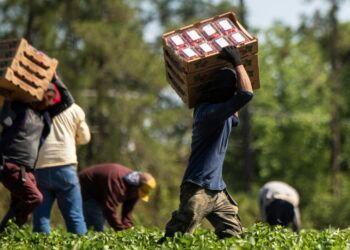
Rural migrants have restrictive employment opportunities, which often harm their wellbeing. This also translates into a lack of equitable conditions. Rural migrants primarily work in sectors such as agriculture, seasonal harvesting, and construction. This means they experience irregular contracts, low wages, weak inspection, and limited trade union presence. Crucially, those most vulnerable are migrants with insecure or irregular status, as they are more dependent on employers, housing providers, or transport intermediaries. This makes exploitation within this group more difficult to report.
This can be starkly illustrated using examples from rural Southern European regions. In Italy, the “caporalato” system refers to illegal labour intermediation in which informal recruiters control access to work, transport, housing, and wages of immigrants. Despite legal reforms, it remains embedded in areas with industrialized agricultural production, including Puglia and Basilicata (Corrado & Caruso, 2022; Perrotta & Sacchetto, 2014). Studies of Sub-Saharan African tomato pickers in the Capitanata (of the Puglia region) area describe informal settlements, pre-dawn transport to fields, and deductions for rent, transport, or recruitment fees (Perrotta & Sacchetto, 2014). This exemplifies that exploitation is not only a problem specific to individual employers: it is linked to supply chains, seasonal labour demand, weak law enforcement, and the invisibility of workers living outside major cities. Meanwhile, in rural Greece there also is weak local integration coupled with asylum reception and agricultural labour demand. Job matching and vocational training could support rural revitalization, but only if policy accounts for both labour needs and host community reactions (Blouchoutzi et al., 2025; Papadopoulos & Fratsea, 2021).
Moreover, migrants go through various service deficits in rural areas. Small municipalities often cannot provide language classes, legal aid, psychological support, or specialist healthcare. The European Commission’s Action Plan on Integration and Inclusion 2021-2027 recognizes the need for coordinated support in the mentioned areas (European Commission, 2020). This issue is further increased due to flawed dispersal policies. For instance, when asylum seekers are placed in rural areas, mainly because accommodation is available, they may arrive without migrant networks, knowledge of local labour markets, or transport access to services in nearby towns. This can produce secondary movement to cities and weaken the objectives of dispersal itself when employment and service pathways are absent (Papadopoulos & Fratsea, 2021; Rudolph & Wagner, 2022).
Furthermore, rural migrants are critically exposed to a distinct social environment. The Whole-COMM project highlights this by stating that integration policies in small and medium-sized towns and rural areas remain underdeveloped. This is all the more true in the fields of social integration, political participation, intercultural dialogue, and anti-discrimination (Whole-COMM Project, 2024). In rural areas, small migrant populations, recent arrivals, and segregated labour or housing conditions often limit the everyday interactions needed to reduce prejudice. This does not allow meaningful contact to occur which, according to intergroup contact theory, would reduce prejudice, while prevalent absent contact can upkeep threat perceptions further. This is because direct and indirect contact shape attitudes toward refugees, particularly through realistic threat, such as fear of competition for jobs, housing, and welfare, and symbolic threat, such as anxiety about cultural norms and values (De Coninck et al., 2021; Hainmueller & Hopkins, 2014). Thus, hostility emerges not due to rural residents having extensive negative experience with immigrants, but because newcomers are visible enough to symbolize change while remaining socially distant.
The last point makes the problem evident: communities requiring demographic renewal are among those least prepared to welcome immigrants. Simple exposure is not enough, as, for instance, residents in Austrian municipalities hosting asylum seekers became more aware of the presence of newcomers, but interaction remained largely fleeting and passive, while hostility potentially increased rather than fell (Rudolph & Wagner, 2022). Therefore, rural integration policy must actively create structured, positive contact rather than assuming proximity will generate inclusion.
Exemplary and Potential Action
Crucially, evidence on intergroup contact and integration policy should be heavily referenced. A multilevel study in 20 European countries found that stronger integration policies were linked to higher rates of everyday contact between migrants and local community, while the latter was associated with lower symbolic and realistic threat perceptions (Green et al., 2020). Thus, institutional support has potential to generate the conditions for prejudice reduction rather than simple responses to it.
Local policy has proven itself to be essential. The JRC’s work suggests that territorial investment must be combined with people based support, because local strategies can miss the most vulnerable migrants if they are not paired with individual support (Natale et al., 2019). Rural integration therefore requires both area level investment in services and economic development, and targeted support for migrants facing irregular work, precarious housing, or weak legal protection. This distinction is important because improvements to a village or region do not automatically reach the most marginalized migrants. A new bus route, business grant, or training programme may help only those who already have information, documentation, transport, childcare, or language skills. People-based support is needed to make territorial investment accessible to those most likely to be excluded.
Italy’s Strategia Nazionale Aree Interne (SNAI) exemplifies how immigration can be linked to local rural policy. SNAI targets inner areas distant from essential services, many of which also participate in asylum reception, and builds local governance capacity even where demographic outcomes remain uncertain (Rete Rurale Nazionale, 2020). Governance programmes in Italy funded by the Asylum, Migration, and Integration Fund (AMIF) also showcase the potential of EU funding, when channelled through flexible local structures, to catalyse cooperation between agencies that small municipalities rarely develop alone (Campomori & Bassoli, 2024). Moreover, the EU-FRANK project adds that rural resettlement works best when both sides are prepared, implying that refugees need realistic information about rural life, while receiving communities need support before arrivals are placed there (Fratzke et al., 2020).
In terms of transferable rural integration practices, The European Parliamentary Research Service identifies the following. For example, the municipality of Punkalaidun (Finland) used an integration coordinator to connect migrants with farms, small businesses, and local associations, treating immigrant integration as a local development strategy. Oberallgäu, Germany, mobilized municipalities, churches, civil society, and more than 1,000 volunteers across 27 municipalities, showing how small places can compensate for limited professional capacity through coordination. Elsbeere-Wienerwald, Austria, brought together local authorities, police, the Red Cross, associations, and volunteers, while using language training, football, and culinary events to create structured intergroup interactions. Ireland’s Fáilte Isteach paired conversational English with intergenerational volunteering, and Italy’s Terre & comuni linked migrant inclusion with social innovation in a disadvantaged rural area (Martínez Juan, 2017). Together, these examples show that effective rural integration depends not only on large scale programmes, but also on coordinated local infrastructure, pooled funding, and repeated social interactions.
What does the literature suggests should be done on the policy front?
According to the literature, structured contact between different groups should be funded at community level. This includes activities such as sports clubs, volunteering schemes, language exchanges, community walks, and shared workspaces. Such initiatives could create repeated interaction and reduce threat perceptions, instead utilizing positive and socially supported contact (De Coninck et al., 2021; Green et al., 2020). These initiatives should be designed for both migrants and residents, as otherwise they could reinforce resentment in places already experiencing service decline. Moreover, shared activities are more politically sustainable when they benefit long term residents and visibly improve local social life.
Secondly, integration policy instruments should become explicitly migration sensitive. Currently, immigrants play a significant role in the agricultural workforce and broader rural economy, even though their integration remains weakly connected to rural policy (Kalantaryan et al., 2021; Natale et al., 2019). Rural development tools should support basic services, village renewal, enterprise creation, employment, and participant based governance. The final piece of the puzzle is a clearer mandate to connect these instruments with labour standards, decent housing, language support, and migrant inclusion (Martínez Juan, 2017). This would also allow policy to move upstream, as rather than responding after exploitation or exclusion has already occurred, funding would encourage decent work, safe accommodation, and integration planning as conditions of rural development.
Finally, integration plans should clearly delineate rural and urban contexts. This is because most current frameworks are designed with cities as the default environment, while rural immigration processes require different models, especially where specialist organisations are absent and distances are large (Natale et al., 2019; Whole-COMM Project, 2024). Simultaneously, cooperation networks among small municipalities should be supported in order to allow for villages and towns to pool their expertise, document best practices, and make their needs visible at a national and EU level. This could prevent the disappearance of isolated local projects when funding ends, staff changes, or political support weakens. Thus, rural integration networks can turn short term experimentation into institutional learning.
Conclusion
International migrants in EU rural areas showcase a policy gap: rural economies increasingly depend on migrant labour and demographic renewal, yet integration systems remain designed largely for urban settings. The result is a double failure: migrants face exploitation, isolation, weak services, and social exclusion, and rural communities miss an opportunity for revitalization. A more effective approach would treat migration as part of rural development rather than as a separate humanitarian or labour market issue. It means judging success not only by whether migrants remain in rural areas, but by whether they can do so with security, rights, and genuine place in their new communities. Without this shift, successful local experiments will remain isolated exceptions rather than the basis for fair and sustainable rural migration governance.
References
Blouchoutzi, A., Labrianidis, L., & Papadimitriou, P. (2025). Refugees’ settlement in Greece: Employment in agriculture as a pathway to rural revitalization. Growth and Change.
Campomori, F., & Bassoli, M. (2024). Unravelling the multi-level governance of Ukrainian refugee reception in Italy: A focus on small and medium-sized cities. Local Government Studies.
Corrado, A., & Caruso, F. S. (2022). The caporalato system and migrant labour exploitation in Italian agriculture. Journal of Peasant Studies.
De Coninck, D., Rodríguez-de-Dios, I., & d’Haenens, L. (2021). The contact hypothesis during the European refugee crisis: Relating quality and quantity of (in)direct intergroup contact to attitudes towards refugees. Group Processes & Intergroup Relations, 24(6), 881-901.
European Commission. (2020). Action plan on integration and inclusion 2021-2027 (COM/2020/758 final).
European Commission. (2021). A long-term vision for the EU’s rural areas: Towards stronger, connected, resilient and prosperous rural areas by 2040 (COM/2021/345 final).
Eurostat. (2023). Demography of Europe: 2023 edition. Publications Office of the European Union.
Fratzke, S., Kainz, L., Beirens, H., Dorst, E., & Bolter, J. (2020). Refugee resettlement and complementary pathways: Opportunities for growth. Migration Policy Institute Europe.
Green, E. G. T., Visintin, E. P., Sarrasin, O., & Hewstone, M. (2020). When integration policies shape the impact of intergroup contact on threat perceptions: A multilevel study across 20 European countries. Journal of Ethnic and Migration Studies, 46(3), 631-648.
Hainmueller, J., & Hopkins, D. J. (2014). Public attitudes toward immigration. Annual Review of Political Science, 17, 225-249.
Kalantaryan, S., Scipioni, M., Natale, F., & Alessandrini, A. (2021). Immigration and integration in rural areas and the agricultural sector: An EU perspective. Journal of Rural Studies, 88, 462-472.
Martínez Juan, A. (2017). EU rural development policy and the integration of migrants (PE 599.266). European Parliamentary Research Service.
Natale, F., Kalantaryan, S., Scipioni, M., Alessandrini, A., & Pasa, A. (2019). Migration in EU rural areas (EUR 29779 EN; JRC116919). Publications Office of the European Union.
Newsham, N., & Rowe, F. (2023). Understanding trajectories of population decline across rural and urban Europe: A sequence analysis. Population, Space and Place, 29(3), Article e2630.
Papadopoulos, A. G., & Fratsea, L.-M. (2021). Migrant and refugee impact on well-being in rural areas: Reframing rural development challenges in Greece. Frontiers in Sociology, 6, Article 592750.
Perrotta, D., & Sacchetto, D. (2014). Migrant farmworkers in Southern Italy: Ghettoes, caporalato and collective action. Workers of the World, 1(5), 75-98.
Rete Rurale Nazionale. (2020). Migrazioni, agricoltura e ruralità: Politiche e percorsi per l’inclusione nelle aree interne. Ministero delle Politiche Agricole Alimentari e Forestali.
Rudolph, L., & Wagner, M. (2022). Europe’s migration crisis: Local contact and out-group hostility. European Journal of Political Research, 61(1), 268-280.
Whole-COMM Project. (2024). Final policy brief: Migrant integration governance in small and medium-sized towns and rural areas. Horizon Europe.
Woods, M. (2016). International migration, agency and regional development in rural Europe. Documents d’Anàlisi Geogràfica, 62(3), 569-593.
Notes about AI usage:
AI usage was limited, but on occasions included the following:
it was consulted for potential grammar corrections and checking the adherence to the VOYCE English Style Guide at times;
in order fill in idea gaps (if there was a lack of topics to talk about, I asked for recommendations/references/resources) and to reduce word count if required;
also for the references;