
The politicisation of Search and Rescue organisations
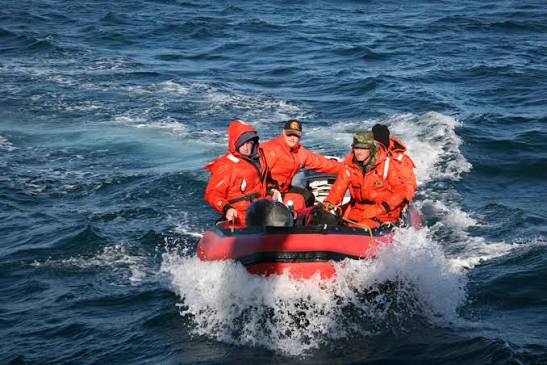
SOS Méditerranée, Migrant Offshore Aid Station (MOAS), Médecins Sans Frontières, The Lifeboat Project. These names might be familiar, as they belong to organizations that all operate in the field of Search and Rescue (SAR) in the Mediterranean Sea. While most of them started their activities quite recently, mostly around the 2015 crisis, SAR organizations have been at the centre of numerous debates. Between 2015 and 2017, at the peak of the crisis that led to 15 000 drownings in the Mediterranean, NGOs rescued more than 100 000 migrants (Cusumano and Pattison, 2018). However, even though they receive occasional waves of support, their work and the framing they operate in is often politicized by different actors. In this article, I will look at the evolution of SAR organizations over the last decade, particularly since Italy ended the Mare Nostrum operation in 2014 and the politicization they have been subject to. To do so, the first part will look at the context in which SAR organizations emerged. The second part will look at the politicization process NGOs have been subject to and their relation with national governments. It will examine the examples of Greece, Spain, and Italy. NGOs providing SAR have faced several legal and political challenges and have been accused of various forms of misconduct, including facilitating smuggling networks or acting as a ‘pull factor’ to Europe. The question of NGOs involved in SAR operation remains salient as many are still active. According to the Fundamental Rights Agency, in the first half of 2026, 21 vessels operated SAR operations in the Mediterranean Sea, while around 1500 persons died or went missing while crossing one of the deadliest seas in the world.
The idea of saving people at sea is far from new. In fact, the concept of Search and Rescue has been codified in International Law since the 1974 Convention for the Safety of Life at Sea and was further established by the United Nations Convention on the Law of the Sea (UNCLOS), in force since 1994. Article 98 states that “Every coastal State shall promote the establishment, operation and maintenance of an adequate and effective search and rescue service regarding safety on and over the sea” (UNCLOS, 1994). Thus, states have, in principle, an obligation to rescue anyone in distress at sea within their Search and Rescue Regions (SRRs). The same obligation applies to any ship registered in the State of that SRR.
In Europe, national SAR operations started in 2004 with the Italian “Constant Surveillance” Operation. However, it was not enough to prevent the deaths of more than 600 migrants when two ships sank in October 2013. This led Italy, under mounting pressure to act and following a public call from the Pope, to launch operation Mare Nostrum. The latter lasted a year and rescued more than 150 000 migrants (Cusumano & Villa 2016). One of the reasons Mare Nostrum ended was the erosion of public support for it, along with pressure from other European states, notably Germany and the UK, which accused Mare Nostrum of encouraging migrants to attempt the crossing of the Mediterranean (Cusumano & Pattison 2018; Riddervold & Bosilca 2017). Mare Nostrum was therefore replaced by the Frontex operations Triton and EUNAVFOR Med Sophia. These two were more concerned with controlling migration flows and dismantling smuggling networks than with SAR operations, which is not even part of their mandate (Cusumano & Pattison 2018). Thus, the void left by Mare Nostrum was filled by NGOs, which became an indispensable component of SAR operations in the Mediterranean Sea. According to Cusimano (2017), NGOs became the largest providers of SAR from 2014 onwards. With 10 organizations involved and dozens of boats, NGOs accounted for almost 40% of rescue operations in the first half of 2017.
The Italian example offers a binary vision of SAR operations. At first, Mare Nostrum was under government supervision, before this field was left to private organizations. These approaches, which can involve both public and private actors as well as cooperation between private actors, are often complementary rather than substitutable. For example, MOAS worked closely with the Italian coast guard but also with MSF, which provided medical assistance on MOAS’ boats. MOAS’ neutral approach is not necessarily the common rule for NGOs providing SAR. This eventually led to the end of the collaboration with MSF and a new partnership with the Italian Red Cross (Cusumano 2021).
However, given their limited capacity compared to that of a State, NGOs publicly acknowledged that their involvement is only the second-best option (Cusumano 2017). The Spanish case offers an alternative: The civil approach. This approach is traditionally under public supervision and promotes a non-militarized model (Vives 2023). This was originally the case with SASEMAR in Spain, which was created in 1993, and initially had no link to military authorities. As Vives explains, the existence of SASEMAR, which was a public agency under the supervision of the Ministry of Development and was, among other things, in charge of SAR operations, explains “the absence of SAR NGOs in Spanish waters and the slow militarization of SAR along the Spanish maritime border compared to the rest of southern Europe” (Vives 2023, 648). However, as will be shown in the second part of this article, even SASEMAR eventually evolved towards a more militarized approach.
In the same way that Mare Nostrum came under pressure from various political actors, NGOs providing SAR also quickly became the target of similar attacks and faced several legal challenges. The first and most common accusation against NGOs is that they act as a ‘pull factor’, meaning that by trying to save people aboard vessels in distress, they encourage more migrants to attempt the crossing of the Mediterranean. This thesis has been disproved by scholars. Sánchez et al. (2023), for example, show that those claims lack empirical support, and also argue that externalization policies, while having an effect in the short run, often fail to address the drivers of migration (Sánchez et al., 2023; Graffin et al., 2025). The same is true of the supposed correlation between smuggling networks and proactive SAR NGOs. The link is not supported by any empirical facts (Cusumano and Pattison, 2018). In the case of the Mediterranean Sea, the attitude of coastal-state governments towards NGOs providing SAR varies from one state to another. However, over the last decade, the overall trend has aligned with the result of different European elections: a reinforcement of the ‘Fortress Europe’ narrative promoted by far-right actors. The consequence is a militarization of border control and the creation of a hostile environment for NGOs providing SAR.
In the case of Greece, the government has maintained a hard line towards SAR NGOs since the beginning of their activities, often threatening these organizations with legal prosecutions by making the patrolling of Greek water illegal. However, despite some investigations being opened, legal prosecutions have been rare, not only because they would carry a reputational cost, but also because Greek and EU law do not criminalize humanitarian actions at sea (Cusumano and Villa, 2016). That said, Greece has nonetheless expelled most NGOs working in SAR from the Aegean Sea since the early 2020s. The remaining organizations are close to the Hellenic coast guards or other public security forces (Vives et al., 2024).
The case of Italy also shows how a government can make NGOs’ work more difficult within their Search and Rescue Region (SRR). In 2017, Italy drafted a ‘code of conduct’ for NGOs providing SAR, threatening to close Italian ports providing such service without having signed it (Cusumano 2017). This was the first step targeting NGOs, whose public support had already begun to erode under pressure from far-right actors. In 2018, the newly appointed Minister of Interior, Matteo Salvini, announced that Italian ports would be closed to foreign vessels working in SAR (Trombetta, 2024). Most of the code’s provisions were ultimately designed either to complicate NGOs’ work or proved unnecessary. The code, for example, forbade NGOs’ vessels from turning off their tracking devices on the grounds that they were accused of entering into Libyan waters, when in fact, the most frequent case of ships turning off their device were commercial boats trying to avoid their own SAR obligations (Cusumano 2017; Aarstad 2015). NGO’s reactions varied: some signed the Code, others refused, and others still, such as SOS Méditéranée, signed it only after the removal of several original provisions. The code undoubtedly weakened solidarity between NGOs and prevented them from presenting a coherent front against the waves of delegitimization launched by political far-right actors. (Cusumano, 2021).
The case of Spain is another example of this broader hostile trend towards NGOs. Though initially independent, with no law enforcement mandate, and outside military authority, SASEMAR gradually adopted a more militarized approach. One reason for this shift is that, as elsewhere in Europe, SASEMAR was accused by VOX of facilitating smuggling networks (Vives 2023). As a result, over the last decade SASEMAR’s operations became coordinated by military commands. As shown by Vives (2023), this did not lead to better results. On the contrary, NGOs must now wait for the exact location of a ship in distress before leaving land to carry out a rescue. This information is communicated by the Spanish air force, meaning that SASEMAR, originally a civil public agency, also became subject to military control.
The reform of SASEMAR, the Italian code of conduct, or Greek strict rules, all stand as political obstacles to NGOs working in SAR.
In conclusion, the case of NGOs providing SAR broadly illustrates the political trend in Europe over the last decade. Italy's response in 2013 and the operation Mare Nostrum were still in the wave of the 2012 Nobel Peace Prize received by the EU. However, far-right actors quickly reshaped the narrative surrounding SAR organizations. This is true of private actors, as shown by the Greek case and the code of Conduct drafted by Italy, but also of public ones, as shown by the SASEMAR case and the pressure surrounding Mare Nostrum. NGOs providing SAR tried to organize to counter accusations such as acting as a pull factor, even though those were mostly unfounded. Human Rights at Sea for example, provided legal advice to other NGOs to avoid criminalization (Cusumano and Villa, 2016). Similarly, staff often moved between different NGOs to learn from one another and better coordinate their actions (Cusumano 2021). These practices persisted even though disagreements between NGOs remained: MOAS, for example, has always maintained its neutral approach and is particularly attached to it, while NGOs such as MSF (the Amsterdam branch) and SOS-Méditérannée have fundings from European Institutions (Cusumano, 2021). Initiatives such as the Italian code of conduct contributed to undermining cohesion among these organizations. In any case, since the end of the wave of public support for Mare Nostrum, governments’ approach to SAR operations has shifted towards a highly military model, reinforcing the ‘Fortress Europe’ narrative promoted by the far-right without necessarily deterring people from crossing one of the deadliest seas in the World.
Bibliography
Aarstad, Å.K (2015) The duty to assist and its disincentives: the shipping industry and the Mediterranean Migration Crisis Mediterranean Politics, 20(3), pp. 413–419.
Cusumano, E. (2017). Emptying the sea with a spoon? Non-governmental providers of migrants search and rescue in the Mediterranean. Marine Policy, 75, 91–98. https://doi.org/10.1016/j.marpol.2016.10.008
Cusumano, E. (2017). Straightjacketing migrant rescuers? The code of conduct on maritime NGOs. Mediterranean Politics, 24(1), 106–114. https://doi.org/10.1080/13629395.2017.1381400
Cusumano, E. (2021). United to rescue? Humanitarian role conceptions and NGO–NGO interactions in the Mediterranean Sea. European Security, 30(4), 547–568. https://doi.org/10.1080/09662839.2021.1893698
Cusumano, E., & Pattison, J. (2018). The non-governmental provision of search and rescue in the Mediterranean and the abdication of state responsibility. Cambridge Review of International Affairs, 31(1), 53–75. https://doi.org/10.1080/09557571.2018.1477118
European Union Agency for Fundamental Rights. (2026, June). Search and rescue operations in the Central Mediterranean and fundamental rights – June 2026 update. https://fra.europa.eu/en/publication/2026/search-and-rescue-operations-central-mediterranean-and-fundamental-rights-june
Graffin, N., Howard, M., & Vincett, J. (2025). Criminalisation and control: Mediterranean maritime search and rescue workers' perceptions of uses of law. Refugee Survey Quarterly, 44(2), 228–251. https://doi.org/10.1093/rsq/hdae026
Riddervold, M., & Bosilca, R.-L. (2017). Not so humanitarian after all? Assessing EU naval mission Sophia (ARENA Working Paper No. 5/2017). ARENA Centre for European Studies, University of Oslo. https://www.sv.uio.no/arena/english/research/publications/arena-working-papers/pdf/2011-2020/wp-5-17.pdf
Rodríguez Sánchez, A., Wucherpfennig, J., Rischke, R., & Iacus, S. M. (2023). Search-and-rescue in the Central Mediterranean Route does not induce migration: Predictive modeling to answer causal queries in migration research. Scientific Reports, 13, Article 11014. https://doi.org/10.1038/s41598-023-38119-4
Trombetta, I. (2024). Urban and social resilience—the role of cities and civil society organizations in the Search and Rescue system in the Mediterranean. Frontiers in Political Science, 6, Article 1408129. https://doi.org/10.3389/fpos.2024.1408129
United Nations. (1982). United Nations Convention on the Law of the Sea. https://www.un.org/depts/los/convention_agreements/texts/unclos/unclos_e.pdf
Vives, L. (2021). Death at sea: Dismantling the Spanish search and rescue system. Geopolitics, 28(2), 641–666. https://doi.org/10.1080/14650045.2021.1973438
Vives, L., Banos, A., Martel, C., Hessek, E. R., & Williams, K. (2024). Maritime SAR systems in the EU: Convergence and co-optation into the anti-immigration border. Journal of Borderlands Studies, 40(3), 669–690. https://doi.org/10.1080/08865655.2024.2356775