
The (Un)Welcoming Hands: the EU’s Reception Pathway
Introduction:
There are many ways to welcome someone. Some are costly, while others are cheaper; some leave the guest well off, others ruin their mood far beyond their stay. However, there are also distinct stages in welcoming someone: from the guest waiting in front of the door, and exchanging welcoming remarks on the doorstep, to dining with the host in the kitchen. Similarly, countries have to welcome refugees. Depending on the funding, the degree of consideration given to their needs, and the amount of people hosted, it can facilitate their integration into the host country’s society, or, conversely, prolong the process and become a hurdle to assimilation. This article aims to provide a good understanding of which reception models should be elaborated on, and which serve as an example for future policy makers and third party actors (i.e. NGOs and the private sector). Thus, after briefly covering the way first arrival structures developed throughout time in the EU, the article examines their three broad types (border reception facilities; centralized collective reception centers; and dispersed community based reception), and finally compares them by providing their key differences and similarities, evaluating each model in turn.
Compact History of First Arrival Structures
Throughout the years, the dominant reception structures in the EU have shifted due to the changing demand and supply of immigrants given the continent’s circumstances. It is important to trace the prevailing trends from the times before the EU was established in order to contextualise the evolving practices and shifting dynamics.
A good starting point is the Second World War, after which people displaced from war were hosted in nation-level camps, which foreshadowed the emergency reception camps that we know today. However, it is crucial to highlight that even then there were attempts to provide an alternative to the mainstream mass camp model. For instance, in Sardinia, the Homeless European Land Programme was established to combine refugee settlement with agricultural work and local development, treating newcomers as potential participants of reconstruction (Ballinger, 2025).
After a few years, legal frameworks began to be established. The 1951 Refugee Convention defined the international status and rights of refugees. Later, the 1967 Protocol removed geographic and temporal restrictions of the original Convention (United Nations High Commissioner for Refugees [UNHCR], 2010). These legal instruments created obligations for refugee protection but did not establish a unified European reception system. Accommodation and material support mostly remained the responsibility of individual states.
Immigration was largely seen in a positive light during the rebuilding that was required after the devastating consequences of WWII. In several Western European countries, citizen labourers were insufficient in the reconstruction of the economy, thus they resorted to getting workers from peripheral countries and eventually those outside Europe. These labour migrants were generally housed by employers, in workers’ hostels, or in private accommodation rather than refugee reception facilities. Native labourers were also less willing to accept poor living conditions and lower pay than immigrants. While this was meant to be a temporary residency, many later settled permanently or even brought their family members (Akgündüz, 2012; Castles, 1986). Moreover, decolonization processes brought a lot of people back into Europe, including both European nationals and foreigners trying to find an escape from turbulent situations back home.
This trend continued until the 1973 oil crisis, after which governments generally moved away from recruiting migrant workers. There were more restrictions being established in the recruitment process as there was less support for additional labour migration during economic uncertainty. This made family reunification and asylum more important routes of entry, while governments increasingly institutionalized accommodation for people waiting for their asylum decisions. Later, the 1990 Dublin Convention embedded the principle that one European state (often the one of first entry) would be responsible for examining an asylum application before entry.
1999 also marked a new chapter, as the Tampere European Council created the Common European Asylum System and called for common minimum conditions for receiving asylum applicants (European Council, 1999). The Reception Conditions Directive followed in 2003, later recast in 2013, and created common minimum requirements relating to accommodation, healthcare, education, and material assistance. However, despite centralization, implementation of such requirements remains highly uneven across Member States.
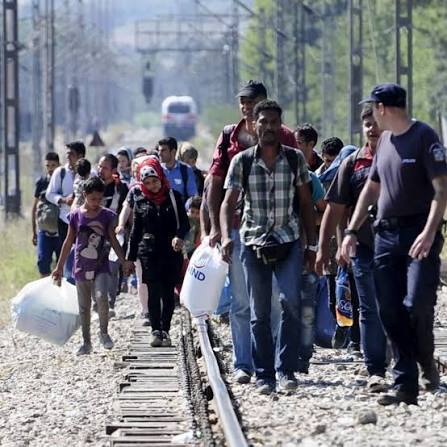
The 2015 ‘migration crisis’ in the EU accelerated the use of emergency mass migrant camps and border hotspots in the peripheral countries, particularly in Greece and Italy. Many migrants were stuck in the border zones due to asylum systems and transfer arrangements lacking sufficient capacity. There was also an increase in mortality rates of crossing refugees. At the same time, there were groups and community activism present in the shape of homestead hosting practices and other small scale initiatives (Glorius & Doomernik, 2020; Kreichauf, 2018). At this point, three dominant forms of migrant reception were starting to be clearly visible.
Different Reception Structures
The Border Zones
Border control zones are usually the first point of contact in the refugee arrival process. In the larger EU context, ‘hotspots’ is used a term for facilities in which national authorities and EU agencies collaborate with the main purpose of identification, registration, fingerprinting, and health and security checks for refugees, as well as evaluation of the viability of their candidacy to enter the country as an asylum seeker. These checks lead to a referral into asylum or return procedures (European Parliamentary Research Service, 2023). The intended purpose of this form of arrival structure is to process arrivals quickly while addressing immediate humanitarian and security needs.
These functions require some form of infrastructure. However, the process is often prolonged due to large amounts of red tape alongside insufficient staffing relative to the number of arrivals. The European Union Agency for Fundamental Rights (FRA, 2021) warns that prolonged stays in these areas have often coincided with more difficulties in upholding dignified living conditions. It identifies adequate capacity, sanitation, healthcare, child protection, legal information, and freedom of movement as essential requirements.
During times of frequent arrivals, the resulting conditions might include overcrowded sleeping areas, poor hygiene, insufficient healthcare, limited privacy, and exposure to extreme weather. For instance, the Greek island hotspots, such as Moria on Lesvos, became prominent examples of processing facilities becoming prolonged sites of containment. Meanwhile, the 2021 Belarus EU border crisis showed another form of border reception. During it, in Lithuania, Latvia, and Poland, the first ‘facility’ was often a militarized territorial zone involving patrols, makeshift holding locations, detention, and repeated movement across the border. The states responded by introducing emergency legislation, pushbacks, and restricted border areas, which prompted criticism from human rights organizations (Forti, 2023).
Additionally, the border procedures might restrict access to protection. A standardized screening process can overlook trauma, disability, or persecution that is not immediately visible. Åberg (2022) agrees with this and argues that group based screening prioritizes predefined categories over individual experiences. Moreover, remote locations and accelerated procedures might further restrict access to lawyers, interpreters, and NGOs.
Geographical separation and controlled movement can also lead to a blurred distinction between reception and detention. Some argue that these border zones tend to act as a way to deliberately confine the majority of incoming refugees at EU borders (Campesi, 2018). This is exacerbated by the fact that in the macro case of the EU, a lot of these hotspots are hosted by islands, which confines the newcomers further, even if they eventually leave the border facility.
Government Mass Reception Centers
The second general type of reception available across the EU is the use of large scale accommodation provided or contracted by the state. Normatively, this method would bring the needed benefit of providing centralized support to displaced refugees, such as food, medical support, etc. (European Council on Refugees and Exiles [ECRE], 2020) They can also provide additional capacity during sudden increases in arrivals and are meant to aid an eventual transition to private housing. This centralized structure can also make immediate access to social workers, language courses, and health support easier to organize (Khalil & Tjaden, 2025).
However, their scale and organization can have serious disadvantages. René Kreichauf uses ‘campisation’ of the centres to characterize the development of large and segregated forms of refugee accommodation. Rather than receiving support, residents often experience poor living conditions due to overcrowding or insufficient staffing (Kreichauf, 2018). Beyond material conditions, large reception centres can also produce social segregation and reduce residents’ contact with the host population, especially when they are physically or socially separated from surrounding communities (Khalil & Tjaden, 2025).
Additionally, the centralization feature of such facilities often has a downside of increased control, uncertainty, and lack of privacy (Lacroix & Bertrand, 2024). It is therefore important to ensure that reception facilities do not become places where residents feel detained or imprisoned. The duration of stay is especially important here. Some asylum seekers have remained in reception centres for several years due to lengthy asylum procedures, limited municipal capacity, and tight housing markets, meaning that a temporary facility can become a long term place of residence (Khalil & Tjaden, 2025).
It has been shown in literature that a comparatively quick transition out of these mass reception centres often leads to moderately increased interactions with the host population and refugees’ ‘language proficiency’ (Khalil & Tjaden, 2025). This means that prolonged stay in these centres might reduce the newcomer’s opportunities for integration. However, the evidence is not completely one sided. Khalil and Tjaden (2025) find no significant effect on employment and also show that some refugees move into more disadvantaged neighbourhoods after leaving reception centres. This suggests that the success of transition depends not only on how quickly people leave a centre, but also on the quality and location of the housing available afterwards. The former, interestingly, has sometimes been found to be linked to the geographic location of the reception centre in the country itself (Zill et al., 2020).
Community Based Reception
Community based reception is a model centred on smaller scale accommodation provided by NGOs, private bodies, volunteers, or the state in the form of private housing or coliving spaces. Its aim is to supply the residents with greater autonomy and empowerment through increased agency and privacy. The literature suggests that its main strength is the stronger integration capacity it holds, largely due to more interactions with the locals (Al-Hamad et al., 2024; van Dijk et al., 2022). Research on homestay arrangements supports this point, as such settings can facilitate language learning, social network development, cultural communication, and greater autonomy over living conditions (Al-Hamad et al., 2024). One example is the Utrecht Refugee Launchpad. Asylum seekers inhabited it together with young local residents, so that social contact and early inclusion would be encouraged (Oliver et al., 2020).
For instance, there often appears to be a geographical gap between different countries or even municipalities, as each one provides different opportunities for the incoming residents (Zill et al., 2020). This variation is important because the success of community reception depends heavily on local housing markets, municipal services, transport, and the availability of professional support (Bassoli & Luccioni, 2024; Zill et al., 2020). Even private or community based housing can therefore reproduce inequalities if residents are placed in poorly connected or disadvantaged areas.
This reception type is also difficult to perform at a large scale. Affordable housing shortages regularly hinder the opportunity for the hosting of more refugees or might create unintended competition within local rental markets. Zill et al. (2020) describe this as the ‘uneven geographies’ of asylum accommodation, as the opportunities of newcomers are heavily contingent on location. Thus, it is difficult to manage the expanding demand in times of large influxes of newcomers. The wider literature on homestay likewise shows that private hosting is often promoted as a flexible alternative to institutional reception, but it cannot necessarily accommodate all groups equally or on a large scale (Bassoli & Luccioni, 2024). Their review also stresses that homestay should be examined in relation to inequalities and power relations between hosts and guests (Bassoli & Luccioni, 2024).
Interpersonal relationships also need to be considered in some cases of community based reception. Ran and Join-Lambert (2020) find that family hosting can strengthen social connections and refugees’ feeling of belonging, but may at the same time negatively affect privacy and independence. They therefore conclude that family hosting is not a universal solution and that its suitability depends on the refugee’s individual situation and needs. A recent scoping review also identifies monetary stress, cultural clashes, uncertainty over the length of stay, emotional pressure, and host–guest power imbalances as factors that can undermine the stability of these arrangements (Al-Hamad et al., 2024).
Comparison and Potential Improvements
It can be clearly deduced that the three types of reception facilities present in the EU are complementary rather than directly interchangeable. Border zones intend to register and screen; mass centers provide temporary capacity and centralized services; while community based reception supports ordinary living and early inclusion. Thus, the value of comparison is in asking whether each category performs its intended function.
The first criterion is functional suitability. Border facilities fail when they become long-term containment sites, while mass reception centres fail when emergency accommodation turns into prolonged institutional residence. Meanwhile, community based reception fails when unsupported dispersal leaves residents isolated in ordinary private housing.
Secondly, the duration plays a crucial part. Stays in the border zones should remain brief and include legal access, repeated vulnerability assessment, and guaranteed onward transfer. The collective centres should offer smaller residential units, greater privacy, accessible locations, and immediate exit planning. Finally, community reception needs to have stable leases, professional case management, and predictable municipal funding to reduce existing inequalities and uncertainties.
Continuity between stages is evidently essential, as medical records, legal assistance, schooling, and family arrangements should travel with the residents during their transfers. Thus, alongside the number of beds, adequate staffing, transport, onward housing and other services need to be ensured for an efficient and harmless transition.
A lot of consideration should be dedicated to the dynamics between state control and personal autonomy. Community accommodation serves as a model which provides greater independence; it demands extensive coordination across local institutions and ensures that host-guest relationships remain healthy in the host family model. Meanwhile, border facilities and mass centres often become places where state control is dominant. Border facilities should be used for the shortest period, while mass centres should distance themselves from prison-like characteristics.
An optimal phased pathway would begin with brief, independently monitored border processing, followed by temporary collective accommodation where necessary, and a fast movement into stable community based accommodation. The main objective should be to prevent structures designed for one stage from replacing those that should follow.
Conclusion:
The literature suggests that the main issue with the EU’s reception systems lies in the failure to limit each of them to their initial intended function and to ensure timely movement between them. Failures become apparent when border processing becomes long containment, temporary centers turn into long-term institutions, and community accommodation remains unavailable or unsupported. Thus, a better reception pathway would ensure common standards of dignity and legal protection, invest in municipal capacity and onward housing, while limiting restrictive accommodation. A host has to not only ensure the quality of their doorstep, hallway, kitchen, or living room, but also a proper transition for the guest to move between them.
References
Akgündüz, A. (2012). Guest worker migration in post-war Europe (1946–1974): An analytical appraisal. In M. Martiniello & J. Rath (Eds.), An introduction to international migration studies: European perspectives (pp. 181–210). Amsterdam University Press.
Al-Hamad, A., Yasin, Y. M., Metersky, K., Guruge, S., Jung, G., & Mahsud, K. (2024). Homestay hosting dynamics and refugee well-being: Scoping review. Interactive Journal of Medical Research, 13, e58613. doi:10.2196/58613.
Åberg, K. (2022). Examining the vulnerability procedure: Group-based determinations at the EU border. Refugee Survey Quarterly, 41(1), 52–78. doi:10.1093/rsq/hdab011.
Ballinger, P. (2025). Refugees as resources: A post-war experiment in European refugee relief. Contemporary European History, 34(1), 161–180. doi:10.1017/S0960777324000201.
Bassoli, M., & Luccioni, C. (2024). Homestay accommodation for refugees (in Europe): A literature review. International Migration Review, 58(3), 1532–1567. doi:10.1177/01979183231172101.
Castles, S. (1986). The guest-worker in Western Europe—An obituary. International Migration Review, 20(4), 761–778. doi:10.2307/2137807.
European Council. (1999). Tampere European Council, 15 and 16 October 1999: Presidency conclusions.
European Council on Refugees and Exiles. (2019). Housing out of reach? The reception of refugees and asylum seekers in Europe. Asylum Information Database.
European Union Agency for Fundamental Rights. (2021). Initial-reception facilities at external borders: Fundamental rights issues to consider.
Forti, M. (2023). Belarus-sponsored migration movements and the response by Lithuania, Latvia, and Poland: A critical appraisal. European Papers, 8(1), 227–238. doi:10.15166/2499-8249/648.
Glorius, B., & Doomernik, J. (Eds.). (2020). Geographies of asylum in Europe and the role of European localities. Springer. doi:10.1007/978-3-030-25666-1.
Khalil, S., & Tjaden, J. (2025). How reception centers affect the integration of asylum seekers and recognized refugees. European Societies, 27(4), 617–643. doi:10.1162/euso_a_00018.
Kreichauf, R. (2018). From forced migration to forced arrival: The campization of refugee accommodation in European cities. Comparative Migration Studies, 6, Article 7. doi:10.1186/s40878-017-0069-8.
Lacroix, J., & Bertrand, A.-L. (2025). From collective centres to private accommodation: Housing trajectories of asylum migrants in Switzerland. Housing Studies, 40(5), 1205–1225. doi:10.1080/02673037.2024.2344856.
Oliver, C., Geuijen, K., & Dekker, R. (2020). Social contact and encounter in asylum seeker reception: The Utrecht Refugee Launchpad. Comparative Migration Studies, 8, Article 27. doi:10.1186/s40878-020-00187-0.
Radjenovic, A. (2023). The hotspot approach in Greece and Italy. European Parliamentary Research Service.
Ran, G. J., & Join-Lambert, H. (2020). Influence of family hosting on refugee integration and its implication on social work practice: The French case. European Journal of Social Work, 23(3), 461–474. doi:10.1080/13691457.2019.1706450.
United Nations High Commissioner for Refugees. (2010). Convention and protocol relating to the status of refugees.
van Dijk, H., Knappert, L., Muis, Q., & Alkhaled, S. (2022). Roomies for life? An assessment of how staying with a local facilitates refugee integration. Journal of Immigrant & Refugee Studies, 20(3), 321–335. doi:10.1080/15562948.2021.1923879.
Zill, M., van Liempt, I., Spierings, B., & Hooimeijer, P. (2020). Uneven geographies of asylum accommodation: Conceptualizing the impact of spatial, material, and institutional differences on (un)familiarity between asylum seekers and local residents. Migration Studies, 8(4), 491–509. doi:10.1093/migration/mny049.
Notes about AI usage:
- AI usage was limited to the formatting of references and fixing grammatical errors.