
Unaccompanied Minors in the EU: Legal Frameworks and Challenges
By Agnese Coletta
17 min read · 3,303 words
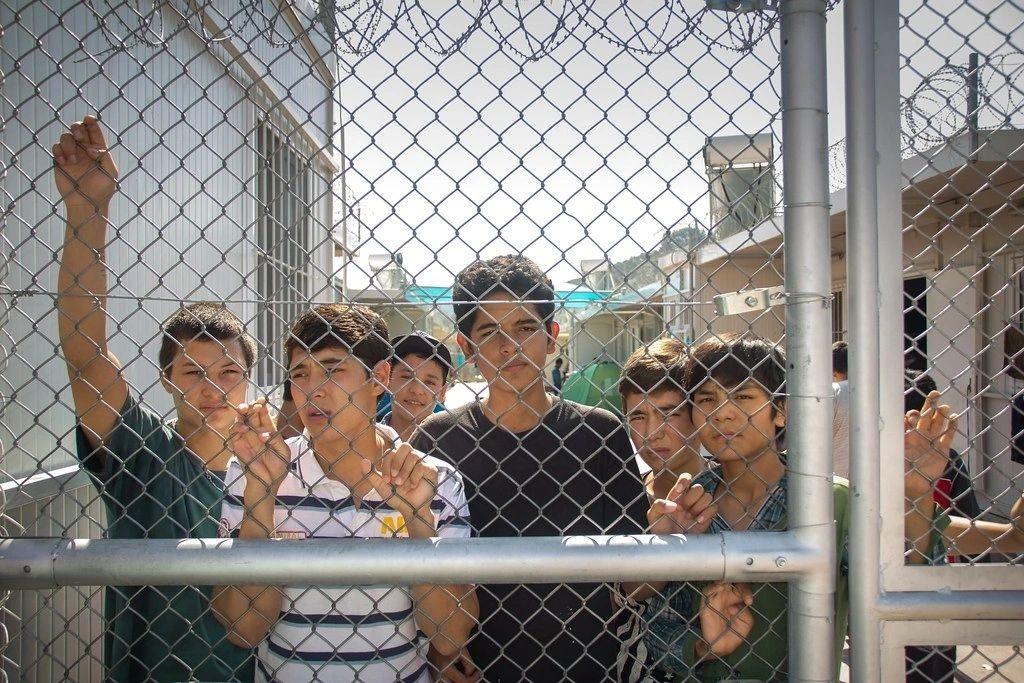
Every year, tens of thousands of children arrive at EU borders, often fleeing persecution, conflict, or extreme hardship. In 2024, for instance, roughly 234,670 first-time asylum applicants in the EU were aged under 18, of whom 15.9% (circa 37,000) were unaccompanied (European Commission, 2025). Unaccompanied minors are amongst the most vulnerable migrants, and thus require appropriate and elevated protection. In response, the EU has developed a complex legal framework, built on international human rights law and the EU’s acquis, to safeguard these children. In theory, EU law guarantees every unaccompanied child a guardian, suitable accommodation, schooling, health care and full access to asylum procedures, while prohibiting detention except as a last resort. In practice, however, reports by agencies and NGOs indicate gaps in this framework. Indeed, reports have documented incidents of child detention, unreliable or inadequate age assessments, insufficient guardianship, pushbacks at borders, and overcrowded centres, revealing that UAMs’ rights are often not fully realised (International Rescue Committee, 2024; Cummaudo et al., 2024).
Legal Framework
Unaccompanied minors (UAMs) are children under the age of 18 travelling without a parent or legal guardian; they are protected under both international human rights law and EU law. At the international level, the United Nations Convention on the Rights of the Child (UNCRC), ratified by all EU Member States, is a foundational legal instrument (EUAA, 2022; UN Commission on Human Rights, 1990). The Convention establishes non‑negotiable standards, including the concept of the ‘child’s best interests’ (Article 3), the right to protection from violence (Article 19), the obligation to provide appropriate care for children deprived of their family environment (Article 20), and the right to protection in situations of conflict or migration (Article 22, on refugee children) (UN Commission on Human Rights, 1990; EUAA, 2022). The Committee on the Rights of the Child’s General Comment No. 6 (2005) specifically addresses the treatment of unaccompanied and separated children outside their country of origin, providing authoritative guidance on interpretation (UN Committee on the Rights of the Child, 2005). Furthermore, the General Comment No. 14 (2013) states the right of the child to have his or her best interests taken as a primary consideration (Article 3, paragraph 1), outlining the requirements for a child’s best interest to be taken as a priority (UN Committee on the Rights of the Child, 2013; Morgano, 2020). A high standard and a general framework are indeed set by international law, aiming to ensure that all children receive appropriate care and protection.
At the EU level, these norms are reinforced. For instance, Article 24 of the Charter of Fundamental Rights of The European Union states that “In all actions relating to children…the child’s best interests must be a primary consideration”, and that children have the right to protection and care necessary to ensure their well-being (European Union, 2012). Moreover, the European Convention on Human Rights (ECHR) also includes provisions protecting children against abuse and detention, such as Article 3 (prohibition of torture and inhuman treatment), and Article 5 (right to liberty) (Council of Europe, 1950). These instruments collectively reinforce the requirement that children must be protected under EU law. Accordingly, the EU’s Common European Asylum System (CEAS) is designed to integrate these principles, requiring its Member States to ensure full compliance with the ‘child’s best interests’ principle when applying EU directives (EUAA, 2022).
Furthermore, there are several EU legal instruments which address more specifically other crucial aspects of UAMs entering the EU, such as the reception and processing of unaccompanied minors seeking protection. For instance, Directive (EU) 2024/1346 (the Recast Reception Conditions Directive, RCD) sets standards for housing, care and assistance of UAMs (European Union, 2024a). Article 24 (b) designates UAMs as ‘applicants with special reception needs’, requiring Member States to take into consideration their specific situation. Furthermore, Article 27 of the Directive focuses entirely on unaccompanied minors, providing the procedures for appointing and reviewing provisional representatives, with a time limit for Member States of ‘no later than 15 working days from the date on which the application is made’, and requiring the appointed representative to ‘take into account the minor’s own views about his or her needs’ (European Union, 2024a; ECRE, 2024a). Article 27(10) also requires authorities to initiate family-tracing of UAMs ‘as soon as possible’ after the application is made, while also fully safeguarding the best interests of the applicant. The provision stresses that any possible life or integrity threats to the applicant or to their close relatives must be considered, and that confidentiality and care must always be taken to ‘...avoid jeopardising their safety’ (European Union, 2024a). Thus, the RCD establishes procedural safeguards theoretically enabling UAMs to effectively exercise their right to protection.
Another important EU directive is the Qualification Directive (2011/95/EU), which sets the standards for granting refugee or subsidiary protection status (European Union, 2011). In particular, Article 2(k)-(l) provides definitions of ‘minor’ and ‘unaccompanied minor’ in accordance with the UNCRC, clarifying who is covered by the Directive. The Directive also includes that a UAM may be granted dependent subsidiary protection status if a close relative in another Member State is granted protection, emphasising family unity, though details are limited, as family reunification rules are primarily governed by other instruments (Morgano, 2020; EUAA, 2025).
Moreover, the new Asylum Procedure Regulation (Regulation (EU) 2024/1348) (APR), which replaces the Asylum Procedures Directive (2013/32/EU), includes more comprehensive reforms. In its preamble, the APR requires Member States to make the child’s best interests a primary consideration, consistent with Article 24 of the EU Charter and the UNCRC (European Union, 2024b). The APR further adds procedural safeguards such as establishing that UAMs must have a representative present during interviews or age assessments, and that a designated person (e.g., a social worker or caseworker) must act as an interim assistant until an official guardian is appointed to the unaccompanied minor (ECRE, 2024b). The Regulation also references the ‘best interests of the child’ principle, stating that ‘having regard to the importance of…the need to take into account the best interests of the child, unaccompanied minors should not…be subject to the border procedure…’ except in exceptional cases, reinforcing the EU’s commitment to act in accordance with children' s rights in these scenarios (European Union, 2024b; ECRE, 2024b).
Rights and Safeguards of UAMs
Unaccompanied minors enjoy distinct rights and protections under EU migration and asylum law. Central is the ‘best interests of the child’ principle, requiring that all (administrative or legal) decisions prioritise the child’s welfare (EUAA, 2022). This necessitates individualised assessments of factors such as age, maturity, and personal circumstances of the applicant before any decisions concerning placement, guardianship, or detention are made. International standards (e.g., UN General Comment No. 6) emphasise that the ‘best interest’ assessment must be documented in each case (European Commission, 2024; UN Committee on the Rights of the Child, 2005). EU law reinforces this through provisions such as Article 23(2) RCD and Recitals 15, 23, and 67 APR, which codify the ‘best interest’ principle as a primary consideration. Consequently, for instance, a UAM’s case may be exempted from accelerated asylum procedures if such fast-track processes would undermine their interests (European Union, 2024b; ECRE, 2024a).
Another crucial protection is the prohibition of detention. Both the CRC (Article 37) and the EU Charter (Article 24) prohibit detention of children except as a measure of last resort. The RCD explicitly prohibits detention of asylum-seeking children on the sole basis of their migration status (Recital 26), and similar provisions (e.g., APR, Recital 69) reaffirm that minors should not be detained for immigration reasons (International Commission of Jurists et al., 2025). Indeed, UN guidelines consider immigration detention as inherently contrary to a child’s best interests. EU law requires the use of alternatives (e.g., assignment in a designated residence) and mandates judicial review when detention is, exceptionally, used. In practice, however, despite these guidelines, some Member States continue to detain unaccompanied minors at borders or in deportation centres, often citing security concerns. NGOs and UN experts widely criticise this practice and emphasise that states should, instead, strictly avoid any routine detention of children, adhering to the principle that detention should only occur after careful assessment and where no alternatives exist (International Commission of Jurists et al., 2025; Mets, 2020).
Another essential right is the UAMs’ right to a guardian or representative to act on their behalf from the start of the asylum process. The RCD requires the prompt appointment of a representative, whose role is to act in the child’s best interests and assist them with the legal processes (e.g., submitting the asylum claim, understanding legal rights, etc.), as well as access to essential services (e.g., healthcare, education, etc.). The APR also mandates that, where no guardian is yet available, an interim ‘assisting person’ be designated (FRA, 2022; European Union, 2024b). Representatives and guardians must have no conflicts of interest and should only handle a limited number of cases to ensure that each child receives individualised attention. However, despite these rules, implementation at the national level is inconsistent. Some Member States rely on volunteer guardians with limited training, overburdened social workers, or may assign representatives lacking legal expertise. During the 2015 migration wave, for instance, guardians in some Member States were each responsible for an overwhelming number of cases, compromising individualised support (FRA, 2022).
Procedurally, EU asylum law includes specific safeguards for minors and UAMs. The APR requires that personal interviews and subsequent decisions consider the child’s best interests, and clarifies that minors (generally lacking full legal capacity) may be represented by their guardian or legal counsel throughout the proceedings. In cases of uncertainty regarding identity or eligibility, the child’s testimony is presumed to be accurate and credible unless evidence contradicts it. While rejections can be legally challenged, and UAMs are entitled to free legal aid for appeals, critics highlight that there is an uneven implementation across Member States (ECRE, 2014; Vannelli, 2022). While some countries provide qualified lawyers and guardians to their applicants early on, others delay legal assistance or limit its scope, despite the EU Charter (Article 47) guaranteeing the right to an effective remedy and legal counsel in asylum cases, which should also benefit UAMs (European Union, 2012; Vannelli, 2022).
Welfare and integration supports for UAMs are also mandated under the RCD, including adequate accommodation, food, healthcare, and psychological support. Access to education is also highlighted, and should be granted ‘as soon as possible, or at least within two months’ of the asylum application (Article 16 RCD) (European Union, 2024a). Nonetheless, in practice, while many countries have special shelters or foster care placements for UAMs, other countries, such as Greece and Italy, report overcrowding and inadequate conditions in their reception centres.
Family unity is another crucial concern at the international and EU level. Indeed, the right to family unity entitles unaccompanied minors to have relatives traced and to apply for family reunification. For instance, the Family Reunification Directive (2003/86/EC), as well as Article 23 of the Qualification Directive, allow a UAM to reunite with close relatives in the EU outside the normal allocation rules (European Union, 2003; European Union, 2011). Recent case law has also emphasised UAM’s right to family reunification with parents or a vulnerable sibling (EUAA, 2025). In fact, EU law explicitly requires Member States to pursue family tracing as part of the ‘child’s best interests’ assessment. Despite these provisions, bureaucratic and procedural obstacles often cause significant delays in family tracing and reunification (Labrosse & Testi, 2022; Morgano, 2020).
Ultimately, EU legislation provides a comprehensive legal framework for unaccompanied minors, largely grounded in the ‘child’s best interests’ principle and international law. Nevertheless, consistent implementation across Member States remains a significant challenge, to the detriment of unaccompanied minors and their rights.
Implementation Gaps
Despite the seemingly strong legal framework established by the EU, gaps remain between the rights guaranteed to unaccompanied minors and their actual experiences. One persistent issue, as mentioned previously, is inadequate guardianship and legal representation. Although guardianship is mandated by law, some Member States lack formal appointment systems or are under-resourced, resulting in systems reliant on overburdened or untrained volunteers (Vannelli, 2022; FRA, 2022). A 2022 report by the European Union Agency for Fundamental Rights (FRA) noted that many guardians often manage an excessive amount of cases, undermining the support they can provide to each applicant. Moreover, access to specialized legal aid for asylum remains uneven, leaving many UAMs with little or no legal counsel until late stages of the process, thereby violating their right to effective access to justice (Article 47, EU Charter) (FRA, 2022).
Age assessment practices have also drawn criticism for compromising protections. When an applicant without document claims to be a minor, EU procedures allow Member States to verify their age through medical (e.g., bone X-rays) and multi-disciplinary (e.g., psychosocial) methods. However, experts emphasise that many age-assessment tests have large margins of error and should not be the basis for such critical decisions (Cummaudo M. et al., 2024). If an individual is deemed an adult by these tests, EU child-specific protections no longer apply to them. This misclassification, as seen in past cases, can have serious consequences: minors assessed as adults have faced detention, loss of schooling, loss of guardianship, and risk of deportation. New rules at the EU level attempt to improve this situation. The 2024 APR, for instance, requires age assessments to be done as a last resort and in two steps, psychosocial first, and medical assessment only if needed, always assuming that the applicant is a child if results remain inconclusive (Article 25) (European Union, 2024b). However, consistent implementation of these safeguards across all Member States remains pending, leaving children at risk.
Border procedures and pushbacks present another alarming issue. Some Member States have increasingly relied on ‘asylum border procedures’ (accelerated screenings at/near entry points), granting or denying protection in an effort to manage the influx (International Commission of Jurists et al., 2025; IRC, 2024). Despite the APR explicitly establishing that UAMs should not, as a rule, undergo border procedures, unless in exceptional circumstances such as national security. Reports indicate the frequent inclusion of unaccompanied minors in accelerated screenings without appropriate safeguards. For example, inspections along the Balkan route have documented frequent pushbacks and detentions of unaccompanied minors, often alongside violence, and denial of the opportunity to claim asylum, effectively bypassing the intended protection framework (IRC, 2024). As an interview carried out in 2023 by the International Rescue Committee (IRC) and the Foundation for Access to Rights (FAR) showed, border countries such as Bulgaria, Greece, Italy, and Serbia frequently denied UAMs a chance to enter and to claim asylum. Out of the unaccompanied minors surveyed, 51% of those attempting to enter Bulgaria and 70% of those trying to enter Greece reported pushbacks or violence (IRC, 2024). Such practices directly violate international and EU law, increase the risk of refoulement, and expose unaccompanied minors to human rights violations.
Lastly, a concerning phenomenon which has been noticed over the past decade is the ‘disappearance’ of thousands of UAMs after they arrived in the EU. Many of these children vanish from official reception systems, with the main reasons including poor reception conditions, trafficking, exploitation, illegal adoption, and informal return (Mentzelopoulou, 2025). An inquiry held in 2021 by the investigative journalism project ‘Lost in Europe’ reported that, between 2018 and 2020, at least 18,000 unaccompanied minors disappeared after arriving in EU countries (van den Hof, 2024; Mentzelopoulou, 2025). In response, efforts for improvements have been initiated: for instance, in 2024, the Italian government signed a protocol aimed at preventing the disappearance of UAMs (EUAA, 2025). However, substantial improvements are still needed. These disappearances highlight the legal and operational vacuums present in the EU, where overburdened and/or under-resourced systems lead to gaps in care and oversight, harming children and risking violating rights.
Overall, the European Union has established an extensive and detailed legal framework for unaccompanied minors seeking asylum, theoretically guaranteeing essential rights such as the right to guardianship, appropriate care, education, and protection from detention. However, there is still a gap between formal standards and the reality experienced by many children. In some EU Member States, safeguards often fall short in practice due to resource constraints, inconsistent implementation, and national security-focused approaches. It is important to note that these gaps are not merely procedural but represent significant breaches of fundamental human rights and international law principles. Ultimately, the challenge is no longer one of drafting laws but of enforcing them. The rights and well-being of unaccompanied minors will remain theoretical until uniform implementation across Member States is ensured.
Bibliography
(2014). Right to Justice: Quality Legal Assistance for Unaccompanied Children - Comparative Report. European Council on Refugees and Exiles (ECRE).
(2022). The principle of the best interests of the child. European Union Agency for Asylum (EUAA).
(2022). Guardianship Systems for Unaccompanied Children in the European Union - Developments Since 2014. European Union Agency for Fundamental Rights (FRA).
(2024). Safeguarding the Rights of Unaccompanied Children at EU Borders under the EU Pact on Migration and Asylum. International Rescue Committee (IRC).
(2024a). ECRE Comments on the Directive (Eu) 2024/1346 of the European Parliament and of the Council of 14 May 2024 Laying Down Standards for the Reception of Applicants for International Protection (Recast). European Council on Refugees and Exiles (ECRE).
(2024b). ECRE Comments on the Regulation of the European Parliament and of the Council establishing a common procedure for international protection in the Union and repealing Directive 2013/32/EU. European Council on Refugees and Exiles (ECRE).
(2025). Asylum Report 2025. European Union Agency for Asylum (EUAA).
(2025). Legal considerations around the application of the asylum border procedure to unaccompanied children - Interpretation of Article 53(1) of the Asylum Procedures Regulation. International Commission of Jurists, Save the Children, and Kids in Need of Defense.
Council of Europe (1950). European Convention on Human Rights (ECHR). European Court of Human Rights.
Cummaudo M. et al. (2024). Age assessment in unaccompanied minors: assessing uniformity of protocols across Europe. International Journal of Legal Medicine.
European Commission (2025). Children in migration - asylum applicants. Eurostat.
European Commission (2024). Commission Recommendation (EU) 2024/1238 of 23 April 2024 on developing and strengthening integrated child protection systems in the best interests of the child. Official Journal of the European Union (EUR-Lex).
European Union (2003). Directive 2003/86/EC. Official Journal of the European Union (EUR-Lex).
European Union (2011). Directive 2011/95/EU. Official Journal of the European Union (EUR-Lex).
European Union (2012). Charter of Fundamental Rights of The European Union. Official Journal of the European Union (EUR-Lex).
European Union (2024a). Directive (EU) 2024/1346. Official Journal of the European Union (EUR-Lex).
European Union (2024b). Regulation (EU) 2024/1348. Official Journal of the European Union (EUR-Lex).
Labrosse C. and Testi E. (2022). Not there yet: Family reunification for beneficiaries of international protection. European Council on Refugees and Exiles (ECRE).
Mentzelopoulou M. M. (2025). Disappearance of migrant children in the EU. European Parliament.
Mets K. (2020). The fundamental rights of unaccompanied minors in EU asylum law: a dubious trade-off between control and protection. ERA Forum (Journal of the Academy of European Law).
Morgano F. (2020). Unaccompanied Minors (UAMS) in the European Union. Centro Studi di Politica è+Internazionale (CeSPI).
UN Commission on Human Rights (1990). Convention on the Rights of the Child. United Nations.
UN Committee on the Rights of the Child (2005). General comment no. 6 (2005), Treatment of unaccompanied and separated children outside their country of origin. United Nations.
UN Committee on the Rights of the Child (2013). General comment No. 14 (2013) on the right of the child to have his or her best interests taken as a primary consideration (art. 3, para. 1). United Nations.
van den Hof E. (2024). Data: Explained. Lost in Europe.
Vannelli M. (2022). The Unaccompanied Child’s Right to Legal Assistance and Representation in Asylum Procedures under EU Law. Laws 11.